Content on this page requires a newer version of Adobe Flash Player.

Get Adobe Flash player


Search in the Encyclopedia

Dieren en planten

Water en land

Geology and history   ‘Wier’ dikes   

Mens en Milieu

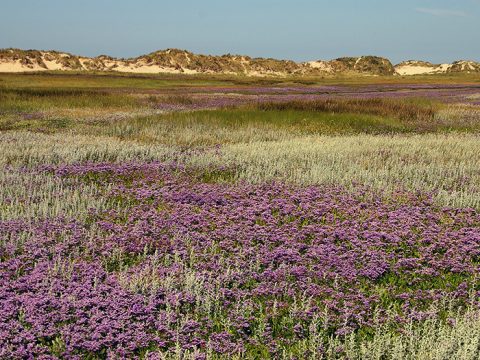
View of Oudeschild with an eelgrass in front, Ecomare

‘Wier’ dikes (dikes made from eelgrass)

The people living in the wadden region during the Middle Ages harvested large amounts of eelgrass. This material was used in various ways, including building dikes. The eelgrass was stamped down between a row of poles and on top of an underground of reed. These dikes rose two meters above sea level. They were often re-enforced on the seaside with thick poles.

  • Weak dikes
    Sea defence of southeastern Texel, Detail of the map Langedijck, 1595

    The eelgrass dikes were weak and low. They were often ruined by storms. New dikes were built around the hole, giving the dikes strange coils.

  • Great shipworm
    Transection of a Zuiderzee dike on Texel, Source: archives Rijkswaterstaat, copy by Eco

    In 1700, a large part of the seawall on the west coast of the Zuiderzee was made up of 'wier' dikes. When the shipworm entered the scene and affected the fortifying rows of poles, the disaster was incalculable. The 'wier' dikes were re-enforced again on a large scale by dumping debris on the sea side.

    Old wier dikes still make up the nucleus of many dikes. The tran-section shown above illustrates a dike on Texel at 'Zuiderzee' height. The lower reed layer, the steep body of the 'wier' dike, the remnants of the destroyed poles and the dumped debris is easy to see. Later, the dike was greatly enlarged by a large body of sand deposited on the land side while the seaside was re-enforced with debris, Norwegian boulders and basalt.