Content on this page requires a newer version of Adobe Flash Player.

Get Adobe Flash player


nets on tidal flats, foto fitis, sytske dijksen

Tidal-flat fisheries

The fisheries in the tidal flat region focuses on mussel seed, mussels and shrimp. The mechanical cockle fisheries ended in 2005. A few people earn their living by digging up lugworms and rag-worms or in the manual cockle fisheries. Beside professional fishermen, you also find sport fishermen on the flats. The fisheries in the Wadden Sea has to deal numerous regulations which are aimed at protecting nature.

From Texel


, Ecomare, Oscar Bos

The harbor of Oudeschild is the home port for one mussel vessel, a number of shrimp boats and small flatfish boats active in the Wadden Sea. Furthermore, there is a Texel company that digs lugworms commercially in the tidal flats around the island.

  • Many ways to catch a fish
    shrimp fishing boats, foto fitis, sytske dijksen

    The following forms of fisheries take place in the Wadden Sea:
    - shrimp fisheries
    - mussel seed fisheries and mussel cultivation
    - manual cockle fisheries
    - fykes and duo fykes (eel, smelt and crabs)
    - standing rigging, vertical nets with large mesh which entangled the fish. This is for catching grey mullet and bass.
    - seining fisheries, a long net which is wrapped around a school of fish and brought on board. This is for catching grey mullet and bass.
    - stow net, conical net held open by one or more horizontal beams below an anchored boat; lies in the current. This is for catching eel smelt and sprat.
    - hook net, baited lines This is for catching dab, flounder, bass and eel.
    - 'weer' fisheries, long fences of nets or branches in a V-shape, placed in the ebb current. This is for catching flatfish and grey mullet.

  • Mussel fisheries
    mussel baskets, foto fitis, sytske dijksen

    The mussel fisheries catch mussel seed that are spread over mussel banks to grow. When the mussels are large enough, they are fished up and transported to the Oosterschelde. In the Oosterschelde, the mussel pumps out all of the sand. It then becomes a 'Zeeuws mussel'. When the shellfish is clean, the animal is fished up for the last time. Eventually, more than fifty million kilograms of mussels are brought on the market per year. In 1995, there were 94 mussel farming companies in the Netherlands. There are around 3100 hectares of mussel plots in the Wadden Sea.

  • Shrimp fisheries
    tourist peeling shrimp, foto fitis, sytske dijksen

    Shrimp are caught along the North Sea coast and in the Wadden Sea. Most are boiled on board, frozen on land, sent to Morrocco where they are defrosted and shelled by women in large factories, refrozen, returned to the Netherlands and brought on the market. Per year, it is a matter of around 15 million kilograms. The shrimp fishing fleet in the Wadden Sea increased in size when the cod fishermen switched over to shrimp when the cod catches declined in the Dutch coastal waters. Of the total amount of shrimp brought to the fish auctions, more than half originate from the Wadden Sea.

  • Lost Dutch fisheries
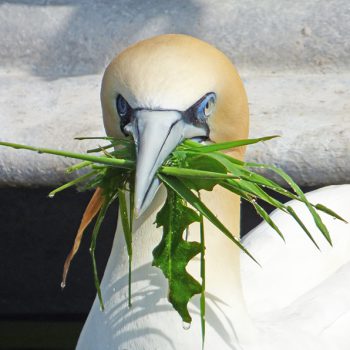
    Eelgrass, foto fitis, sytske dijksen

    Momentarily, only animals are fished in the Wadden Sea. In earlier times, eelgrass was also harvested. It was good material for dike sheeting; it was also used to plug leaks and to fill mattresses and cushions. In those days, one mowed the eelgrass fields and all floating material was collected. The fishery was called seaweed fishing. This form of fishery disappeared with the disappearance of the eelgrass fields.
    Even the fisheries for anchovies and whelks used to earn money. And up till the 1930s, lots of thornback rays and stingrays were caught in the tidal channels. However, all of these species have since disappeared from the Wadden Sea, due to causes which are discussed in the chapters dealing with the individual animal species.

  • Rod and line fishing

    Rod and line, or angling, in coastal waters is a popular sport. Many fish-lovers go with a fishing boat for a day or throw out a line somewhere along the dike, on a breakwater or on the beach. In the wadden region, the catch is mostly flounder. Although rod and line fishing is basically for amateurs, a lot of money is earned in this sector. Lugworms are often used as bait. Revenues from sales of this bait are more than ten million euros annually. Former fishermen earn money by taking amateurs out for a day of fishing in the Wadden Sea or North Sea. The estimated yearly revenue from this branch lies between 7 and 18 million euros. Most wadden fishermen depart from Den Oever and Harlingen.