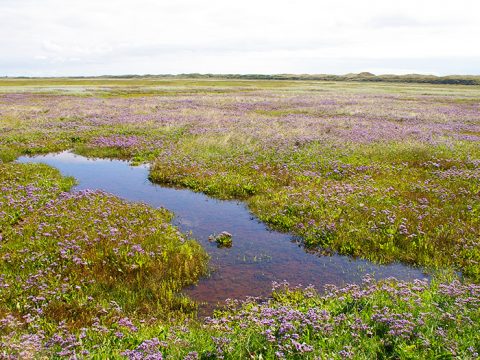
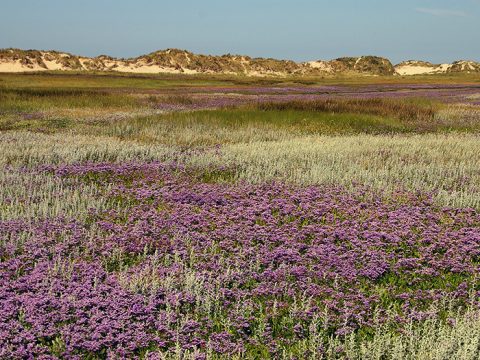
A moderate amount of grazing leads to more variation in a nature terrain (variation in plant species, animal species, structure and succession phases - favourable situations) and prevents forests from forming (unfavourable situation due to less variation). Grazing differs from mowing because the animals do not graze equally intensively everywhere. The trampling and manure droppings of the grazers also influences the variation in a nature area.
These positive effects only occur is grazing is not too intensive. The biodiversity declines when it becomes too much, or one part is overly grazed because the animal's preference. In nesting areas, it can be necessary to end grazing activities long before the season begins, allowing the grass to grow high enough for such birds as godwits and other meadow birds to find sufficient coverage.
There are people who have strong views for and against grazing. What used to be considered ‘good management’ several decades ago now shows many disadvantages in the long run. There are often problems with overgrazing, resulting in tremendous pressures on other organisms. In addition, grazing is difficult to control since it is natural for herds to increase in size. In 2007, a preliminary inventory made by the State Forestry showed that almost all bird species in grazed areas of the Oostvaardersplassen have declined. Rare species of brushwoods and woodlands have even completely disappeared. Between 1997 and 2007, 21 of the 91 bird species have disappeared in this area. In 2008, the State Forestry claimed that this was a logical consequence of the choice for large grazers and greylag geese and therefore must be accepted.
Grazing has roughly two effects on the nutrient-richness of an area. The nutrients phosphate and potassium remain in the system, with the exception of a very small fraction which is removed in the form of meat. Areas evolve which are nutrient-poor (where grazing is heavy) and nutrient-rich (where lots of manure is left behind). Nitrogen, in the form of vaporized ammonia, escapes from the system where urine is released.