Content on this page requires a newer version of Adobe Flash Player.

Get Adobe Flash player


Environmental quality of the North Sea

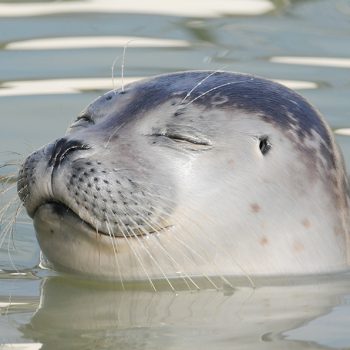
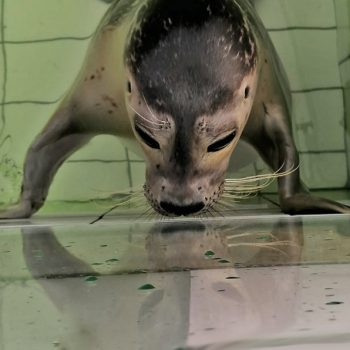
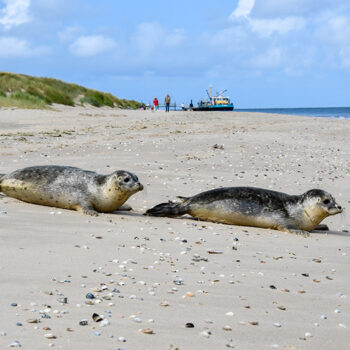
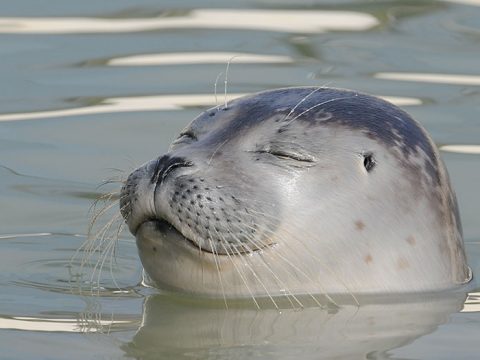
The nature quality in the North Sea is around half of what it would be in a natural situation. Factors which influence the quality include: pollution with heavy metals and other contaminating materials, eutrophication (excess of nutrients) and disturbance from fisheries, sand extraction and marine litter. A number of threats have declined thanks to (inter)national regulations and the North Sea floor has become much cleaner since the mid 1980s. As of 2008, only one of the 7 OSPAR EcoQO targets has been achieved, namely for seals.

  • Nature quality

    The Nature Balance of 2008 has found no visible improvement in the nature quality in the North Sea since 1990. To achieve improvement, the authors recommend more sustainable fisheries, decreasing nitrogen loads, restoring the original dynamics of the coastal waters and strengthening the spatial protection.

  • Contaminated materials

    According to the Fourth Note on Water Management, no disadvantaging effects from contaminating materials, including heavy metals, may be found in the North Sea water as of 2000. That target was not reached. Although there is a declining trend for heavy metals such as cadmium, nickel, zinc and mercury, there are other materials whereby the concentrations are even increasing, such as flame retardants and softeners. In order to suffice the standards by 2020, which were agreed upon in the OSPAR treaties, sources within agriculture and industry in particular must be dealt with. Examples of other contaminating materials are oil, PCBs, PAHs, TBT and pesticides.

  • Eutrophication

    In the OSPAR treaties, it is stated that the emission of nitrogen and phosphate in 2000 may only be 50% of that in 1985. In the meantime, this standard for phosphate has been achieved but the reduction in 2002 was still only 30%. Internationally, reductions are far from being reached. That is why damaging effects from eutrophication, such as algae plagues and toxic algae, oxygen depletion and death among benthic life and fish, is still a major problem. Agriculture is the greatest source of phosphate and nitrogen emissions, but sewage purification plants and industry also contribute.

  • Disturbance from fisheries, sand extraction, marine litter and noise

    The sea environment is disrupted by human interference, particularly with fisheries but also with sand extraction and marine litter. The intensity of the fisheries has increased greatly is past decades. One finds mostly shrimp fisheries along the coast and beam trawl, pelagic (round fish) and industrial fisheries at sea. Various fish populations are now below the safe biological minimum due to fisheries, such as cod and plaice and there is no balanced structure in the fish community: large fish are becoming rarer and species such as rays are disappearing. One regulation to allow young fish to grow up safely is the plaice box.
    The bottom gets churned up from the beam trawl fisheries, whereby long-living benthic animals such as quahogs disappear and make room for short-lived opportunist species. Finally, lots of extra fish are caught as by-catch and thrown overboard and other organisms such as porpoises are getting entangled in fish nets.
    The EC has entered the ecosystem approach in the Joint Fisheries Policy and the fishery sector is looking into environmentally friendly alternative fishery techniques, such as pulse fisheries.
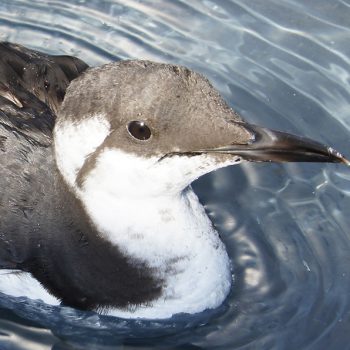
    Another disturbance is sand extraction, whereby the benthic life is destroyed and temporary mud is whirled up clouding up the water. Marine litter is also a problem. Every year, more than 6000 thousand cubic meters of marine litter ends up in the North Sea, mainly from shipping, fisheries and recreation. Birds such as fulmars see plastic for food and end up filling their stomaches with it. Policy is directed at solving the problem by the source, but rubbish is fished out of the see by the fishermen themselves on a small scale.
    Other problems are acoustic disturbance, conflicting use of space, introduction of foreign species and climate changes. It is not so easy to establish future target values for these problems, as opposed to pollution.

  • Measuring environmental quality in open sea

    Various measurement networks regularly help to visualize the environmental quality of the North Sea. A report on pollution from chemical materials is found in the 'Milieubalans 2006' from the National Institute for Public Health and the Environment (RIVM).

  • Measuring the environmental quality of coastal waters

    When preparing the Fourth Note on Water Management, it was agreed upon which materials, species and phenomena provide information about the quality of the environment along the coastal waters of the North Sea. Reports on these 'goal variables' will show whether policy for improving the quality is working.
    It concerns the following chemical materials: total nitrogen, total phosphate, heavy metals (cadmium, copper, lead, mercury and zinc), PCBs, dioxines, PAHs and pesticides (tributyltin, atrazine, simazine, DNOC, 2.4D, diuron, lindane, dichoorvos, parathion-ethyl and mevinfos) and radioactive materials (H-3, Sr-90, I-131, Cs-137 and Po-210).
    The plants which play a role in the measurement system are: the total level of chlorophyl (measurement for plankton growth), plague algae dinophysis and Phaeocystis and branched seaweeds (ceramium, chondus, false Irish moss, cladophora caespitosa, catenella, polysiphonia).
    Fish species also play a role: the fortunes of herring, cod, thornback rays, plaice and smelt are considered indicators of a healthy environment.
    From the benthic fauna, the fortunes of the shrimp and Baltic tellin are determinant for the environmental quality.
    The eider, sandwich tern and Kentish plover are the birds which have been included in the measurement system and the porpoise, the larger dolphin species and the harbour seal from the marine mammals.
    Physical variables have also been included in the system: transparency as measurement for clarity, the total surface area of intertidal region, the total surface area of salt marshes, the total length of banks and the length of natural banks are determinant.
    And finally, human activities are taken into consideratin: the intensity of shipping, the fisheries for plaice, sole and shrimp, the exploitation of oil and gas, the number of recreation days and the quality of the swimming water. There is also a long list of materials that are important when controlling illegal discharges, of which oil is one of the important items.