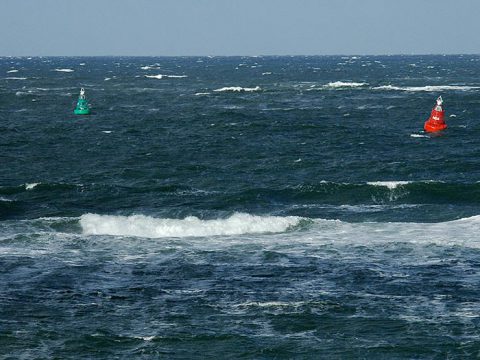
The tranquillity found under water is sometimes disrupted by natural situations. Especially in coastal areas, a considerable storm or a heavy rainfall can lead to an increased noise level up to 75 decibels. It has been shown that dolphins migrate to deeper waters under these conditions. This seems logical since they are not able to orientate as well with all the intensified racket, nor can they probably communicate as well. This underwater noise is referred to as 'acoustic mist'.
Human sources can also cause acoustic mist. Oceanographer Morris performed sound measurements in Cardigan Bay (in the Irish Sea). Under normal circumstances, Cardigan Bay is a quiet area (up to 50 decibels), however during the weekends and vacations between May and September, the local aquatic sports (in particular, the motor boats) increase the background level up to 80-90 decibels. In these periods the dolphins, which are normally observed close by the Cardigen Bay coast during the day, only come to this area during the night to hunt in the fish-rich coastal waters.
It is known that humpback whales are affected by noise from sonar, which is used by submarines for navigation. During mating season, the males 'sing' ballads in order to attract the females. When scientists play a tape with sonar sounds during the singing of the whales, then it would take 30% longer to sing the song. The scientists think that this could disturb the mating ritual.