Content on this page requires a newer version of Adobe Flash Player.

Get Adobe Flash player


Search in the Encyclopedia

Dieren en planten

Water en land

Mens en Milieu

Man and the environment   Safety at sea   Accidents at sea   Wrecks   

Safety at sea

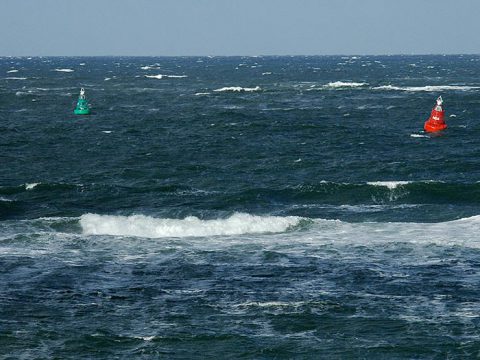
The North Sea is one of the busiest navigated regions in the world. In order to assure the safety of the ships, an extensive network of navigation routes have been laid, marked with buoys, lights and light houses. If there is an accident, the Coastguard offers help and Rijkswaterstaat takes care of any pollution and the wreck. Furthermore, the government has drafted an emergency plan, in which what to do in the case of a disaster. Traffic towers will soon be able to recognize every ship by the Automatic Identification System, just like with airplanes.

  • Automatic Identification System (AIS)

    Using AIS, the Coastguard center can keep much better tags on shipping traffic, whereby accidents can be prevented and if an accident should occur, then they know more quickly what exactly happened. The AIS was only required by larger ships up till now. A ship with such a system transmits every few seconds a unique identification number, what it is doing (motoring, at anchor, loading), the velocity, the turning velocity, position, course and time. In addition, it transmits every six minutes information as to the name of the ship, the cargo, the size, the draft, the expected time of arrival and the place of destination. Other ships and traffic towers in the vicinity can see this information on a screen. The system is not yet required on fishing vessels, but that will not take long. AIS can decrease the chance of accidents because ships can see each other and it is also handy for the company's planning. Using this system, the Coastguard can follow shipping traffic up to thirty miles off of the coast.

  • Automatic Identification System (AIS)

    Using AIS, the Coastguard center can keep much better tags on shipping traffic, whereby accidents can be prevented and if an accident should occur, then they know more quickly what exactly happened. The AIS was only required by larger ships up till now. A ship with such a system transmits every few seconds a unique identification number, what it is doing (motoring, at anchor, loading), the velocity, the turning velocity, position, course and time. In addition, it transmits every six minutes information as to the name of the ship, the cargo, the size, the draft, the expected time of arrival and the place of destination. Other ships and traffic towers in the vicinity can see this information on a screen. The system is not yet required on fishing vessels, but that will not take long. AIS can decrease the chance of accidents because ships can see each other and it is also handy for the company's planning. Using this system, the Coastguard can follow shipping traffic up to thirty miles off of the coast.