Content on this page requires a newer version of Adobe Flash Player.

Get Adobe Flash player


Search in the Encyclopedia

Dieren en planten

Water en land

Mens en Milieu

Shipping   Shipping routes   
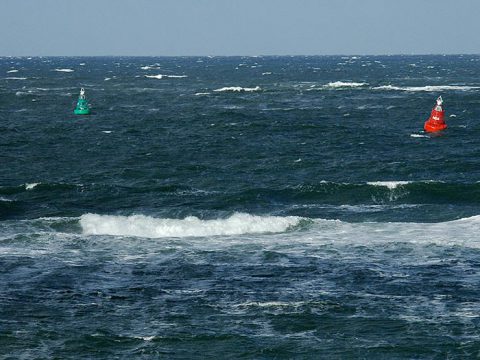
Buoy, Marijke de Boer

Shipping routes

The North Sea is one of the busiest navigated seas in the world. The traffic intensity is high particularly in the southern section. Every year, 250,000 ships pass through the Dutch part of the North Sea. The fishing vessels and the recreational boats are not taken into account. At the end of the 1960s, traffic segregation systems and deep-water routes were established in order to guarantee swift and safe shipping traffic.

  • Shipping routes on the Dutch section of the Continental Plate
    Shipping routes NCP, Ecomare

    On the Dutch section of the continental shelf, permanent navigational routes for large shipping vessels have been established. These routes are called: the Noord Hinder system, the Maas system, the Texel system, the Vlieland system, Terschelling and the German Bight and the Friesland system. The newest route was established on 1 December 1990. All of the routes have sailing lanes for opposing directions.
    No oil platforms or other obstacles are allowed in the shipping lanes. The shipping routes in areas used by the Department of Defence go around the areas and not through them.
    The shipping routes contain 2400 square kilometers (4% of the Dutch Continental Plate).
    Deep-water routes have been made for ships with the greatest draft. There are two such routes in the deepest section of the North Sea between the Dutch coast and the British east coast. Two entry channels have been laid out, which join up with the deep-water routes in the Straits of Dover and lead to Dutch harbours: the Euro-Maas Channel (for shipping to Europoort and Rotterdam) and the IJ Channel (for shipping to IJmuiden and Amsterdam).
    The Euro-Maas Channel is accessible for ships with a draught up to 22.5 meters; the IJ Channel for ships with a draught up to 16.5 meters. An average of 357 ships with the maximum draught sail through the Euro-Maas Channel annually; for the IJ Channel, the average is 90. These channels are dredged yearly to maintain their depth. The deep-water route in the middle of the North Sea is around 35 meters deep. The shipping route closest to the coast is 20 to 25 meters deep at low tide.
    In addition, a separate route exists for the largest ships laden with dangerous materials. This route has been placed as far away from the coast as possible. During controls in Den Helder in 2007, it appeared that tankers with dangerous materials regularly traveled too close along the shore: 65 ships in 3 months. The shipowners were given a fine.
    There are no separate routes for traffic between the continent and the United Kingdom. Where this traffic regularly crosses the main stream of traffic, there are strict regulations concerning observation and traffic is led by stations on land.

  • Shipping routes in the Dutch Wadden Sea
    Shipping routes and harbours, File nedwad.cdr

    In the Dutch wadden region, most of the shipping traffic is to and from the large harbours Den Helder, Harlingen, Lauwersoog, Delfzijl and Emden. The regulations along these routes is less strict, for example, with respect to the maximum speed. The other routes are mostly used by the tidal flat fisheries and the pleasure crafts.