Content on this page requires a newer version of Adobe Flash Player.

Get Adobe Flash player


Search in the Encyclopedia

Dieren en planten

Water en land

Mens en Milieu

Land reclamation   Salt marsh works   
Silt catching dams near Holwerd, Ecomare

Salt marsh works

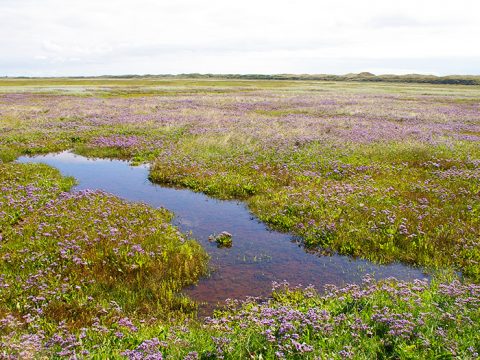
Not all salt marshes have evolved naturally. The salt marshes along the coast of Groningen and Friesland were created with the help of man. By building small dams from twigs and soil, the silt from the Wadden Sea settled in between. When the salt marsh was high enough, a taller dike was built around it so that the land could be utilized, first as a grazing area and later as fields for crops. The newly formed marshes gave extra protection to the earlier dammed up grounds. The technique with osier dams is still being applied to prevent existing marshes from disappearing.

  • Drainage ditches and dams

    Natural marshes had been used as grazing grounds for centuries. Those people that used these grounds discovered that they could speed up the process of mud deposition by providing the area with small drainage canals. Via these channels, the water could flow away quickly during ebb. This gives the bottom more time to dry so that during the next flood, the deposited mud is not as likely to be stirred up as much. The silt deposited in the channels is used for laying down dams. These dams slow down the water movement, so that even more silt settles. The dams are meant to reduce both the erosion of the marsh and the development of marsh cliffs. In addition, cattle on the marshes can withdraw to the earthen dams during high water levels. When the marsh is high enough, the first marsh plants start to grow, which in turn stimulate sedimentation. Eventually, these lands become suitable for impoldering.

  • Salt marsh works along the Dutch northern coast

    For centuries, the farmers along the Friesland and Groningen coasts were preoccupied with land reclamation in this manner. In the 1930s, the Dutch government took over the care of land reclamation from the farmers. They introduced a new work method: the mud flats along the coast were divided into compartments 400 x 400 meters with the help of low twig walls as wave breakers. Through openings in these 'twig dams', the water could flow in and out, but because the flow was greatly reduced, a lot of mud was collected in the 'deposit compartments'. This method provided a lot employment in those days. Presently, land reclamation works in the Netherlands is only continued in order to maintain the existing marshes. These marshes offer protection to the sea dikes and have become important nature areas.