Climate change has a tremendous effect on flora and fauna, both directly as well as indirectly. Oceans and coastal seas are also growing warmer due to changes in sea currents and temperature increases in the air, partially caused by the greenhouse effect. In addition, stable weather patterns are being replaced by periods of long droughts or extreme weather conditions. According to a report by the United Nations Environment Programme (UNEP) in 2008, climate change is a threat for the coastal infrastructure, food and water supplies and human health throughout the world. The greatest impact of the climate changes is concentrated in 10 to 15% of the oceans, with the greatest pressure in the areas with the most valuable fishing grounds.
The UNEP report stated that fish supplies, which were already decreasing due to overfishing, are being threatened worldwide by climate change caused by the discharge of greenhouse gasses such as CO2. The excessive CO2 causes a rise in the degree of acidity in seawater, influencing shellfish and plankton, important links in the food pyramid. High surface water temperatures threaten up to 80% of the coral reefs, which serve as nursuries for fish.
For the Netherlands in theory, this global warming means that land species from southern regions will survive better, while species from northern territories that prefer cooler circumstances will become threatened or disappear entirely. However, those southern species must have the opportunity to move north, and if there are no ecological connections between regions, many plants and animals will never make it here.
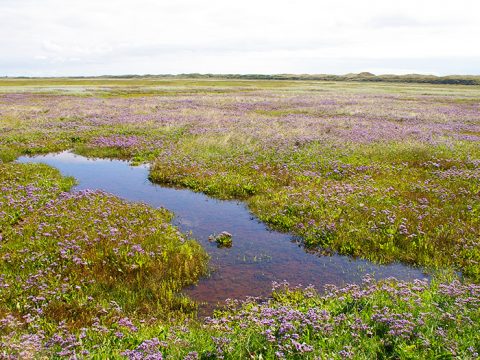
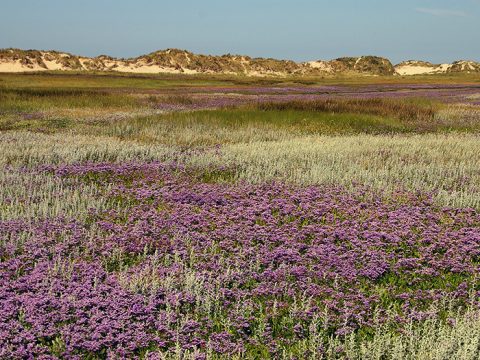
Research performed by Alterra show that plants are flowering earlier and longer. In addition, they are developing more quickly which is favorable for the agrarian sector that can have more crops. However, it means lots of extra work and costs for nature managers to preserve specific plant communities. Extreme weather conditions mean that nature areas will be disturbed more often, which is unfavorable for rare species, but good for pioneer plants. Plant communities in marram grass dunes react quickly to climate changes which means that warm-weather species will increase and cold-weather species decline. On the other hand, salt marshes react more slowly to climate changes because they are under influence of water. Just like the sea that cools off and warms up more slowly than the air, the water on marshes delays the effect of temperature rises.
Climate change for birds is a tremendous threat. The International Union for Conservation of Nature IUCN reported in May 2008 that one out of every eight species of birds worldwide is being threatened with extinction and named climate change as an important cause. The organization had a list of 1220 threatened species, including the curlew, which is presently a wide-spread bird species.