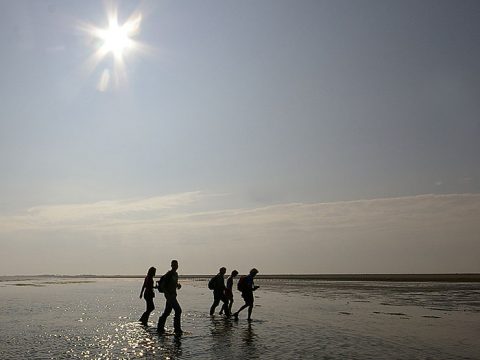
The Coastwatch work begins with an introduction at school. A special lesson kit, a website and a video have been developed for this purpose. Afterwards, the students go to the coast where they make an inventory of all the marine litter they find, with the help of a score list. The score lists used in all of the countries that participate in the project are similar. The children bring the data to school, where it is fed into a specially developed computer program.
A number of schools collect the rubbish and weigh it per category of material. The school results are sent to the North Sea Foundaton and added to all the other data from other participating schools. Around thirty schools take part annually and cover 120 kilometers of coast. Every child receives a Coastwatch newsbrief with the results and short reports after all the data have been processed.
The school children can use the computer program to compare their results with the previous year.
The study results are assembled by the North Sea Foundation and used in an extensive research report. This report, commissioned by Rijkswaterstaat, section North Sea, is published annually in December and contains conclusions and recommendations.
The project has a positive effect on the children and schools. Reports and articles on schools that participate regularly appear. Coastwatch works together as much as possible with partners such as Stichting Duinbehoud (Preservation of the Dunes), provinces and local educational centers, visitors centers, Youth Hostels, Waterland Neeltje Jans and Ecomare. Interested schools can get in touch with the North Sea Foundation.