Content on this page requires a newer version of Adobe Flash Player.

Get Adobe Flash player


Search in the Encyclopedia
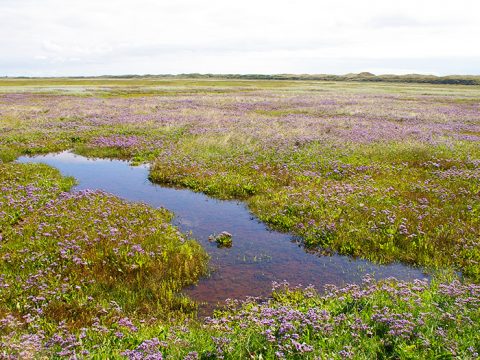
Ditch in Friesland, Ecomare

Fish is ditches, ponds and lakes

The inland side of the wadden region dike are typified with numerous ditches, canals and a number of large ponds and lakes. Each one of these types of waters has its own composition of fish fauna. In general, fish larvae and young fish eat one-celleld organisms and multi-celled microscopic rotifers . Planktonic crustaceans, such as copepods and water fleas, are the most important prey for juvenile adult fish.

  • Fish in stationary waters
    Ditch behind dike, Noorderleegpolder, Ecomare

    Stationary waters do not have any characteristic composition of fish fauna because there are so many different kinds of stationary waters, such as sandpits, canals and trenches. The most common fish species caught in these kinds of waters are roach, bream, perch and silver bream. Other common species are rudd, tench, carp, Leucaspius delineatus and grass carp. These lastly named fish are typical species in man-made waters.

  • Fish in ditches
    Ditch in Firdgum, Friesland, Ecomare

    By definition, a ditch is a linear water less than four meters wide. Water in a ditch hardly flows, if at all. The most common fish species in ditches are three-spined and ten-spined sticklebacks, groundlings and bitterlings. Other relatively common species are roach, tench, pike and perch.

  • Fish in large ponds and lakes

    In the wadden region, bream and roach are the most common fish species in large ponds and lakes, followed by pike and zander. Bitterlings, burbots and crucian carps are also regularly caught. The most successful way to clean up a very turbid lake is to remove most of the fish. The turbidity is often caused by fish churning up the bottom in search of food and too much algae. Water fleas keep the algae under control, unless there are too many fish consuming the water fleas. Therefore, by decreasing the number of fish, there is less churning up and more water fleas, so the chances are great that the water will clear up.