Great cormorant
size:
80-100 centimeters
wingspan: 130-160 centimeters
weight:
between 2.6 and 3.7 kilograms
color:
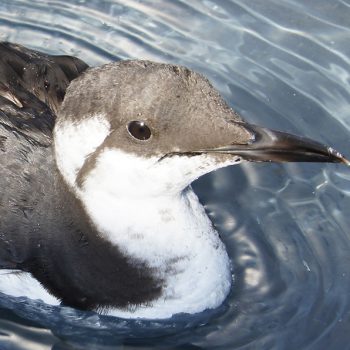
adult: black with white cheek and yellow throat patch; white thigh patch in breeding season
juvenile: grayish black with a white belly
food:
primarily small fish, such as ruff, gobies, lesser sandeel and juvenile flatfish
threats:
overpopulation, leading to possible fututre regulations to limit the numbers
Dutch status:
nesting bird; seen year round, migratory and winter guest
habitat
freshwater and coastal regions
reproduction:
3-4 eggs, usually nests in large colonies in trees or on rocky cliffs
life span:
11 years (maximum known age: + 23.5 years)
special nature:
often seen sitting in the open air with wings spread wide in order to dry them
- Dut: Aalscholver (schollevaar, zeeraaf, stinker, butstekker (B), preekheer (B), scholvader (B))
- Eng: Great cormorant
- Fren: Grand Cormoran
- Ger: Kormoran
- Dan: Skarv
- Nor: Storskarv
- Frisian: Lelgoes
- Ital: Cormorano o Marangone
- Lat: Phalacrocorax carbo

- Great cormorant, Jeroen Reneerkens (jeroenreneerkens@hetnet.nl
Great cormorant
Great cormorants eat fish and are known for their excellent diving skills. They forage in fresh as well as saline or brackish water. They can rotate their eyes, something most other birds are unable to do. Unlike other water fowl, their plumage is not oily. They absorb lots of water, so they need to spread their wings to dry after a swim. This bird has not had an easy life in the Netherlands. Because it was considered a rival for fishermen, they were shot, poisoned, chased away and even hung in huge numbers,
On Texel
In the early part of the 20th century, the cormorant had been exterminated as a nesting bird on Texel. In fact, the great nature conservationist Jac P. Thijsse was present by the happening. In 1999, cormorants started nesting again on the island. Since 2007, their numbers were more than 1000 pairs. They like to nest where spoonbills nest. Texelaars call cormorants 'kontekloppers' (bum beaters). This nickname has to do with the jerky take-off when they want to ascend out of the water. They tend to throw their legs back several times in a row, as if they are getting a running start. After taking off, their rear end repeatedly hits the water.
print