Content on this page requires a newer version of Adobe Flash Player.

Get Adobe Flash player


Search in the Encyclopedia

Shelduck

size:

58-71 centimeters; 110-133 centimeters wingspan

color (adults):

red bill, white and chestnut body, dark green head and neck; difference between male and female is that males have a red knob above their bill (more swollen in breeding season)

food:

laver spire shells, limpets, insects, fish and worms on mud flats; during molting season, seaweed and polyps in open water

Dutch status:

nesting bird; migratory, winter guest, seen year round

habitat

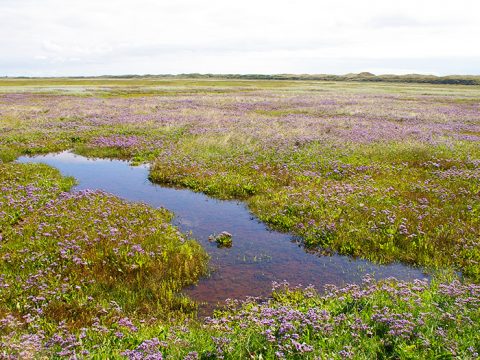
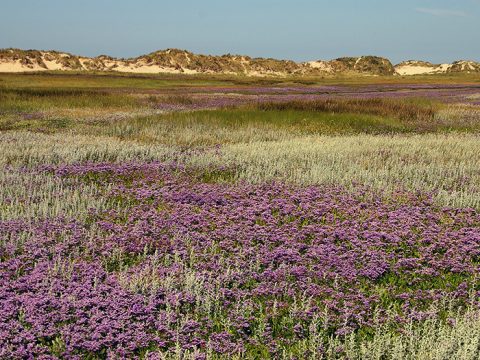
mainly coastal regions, but can also be found in large fresh water regions; breeds in dunes, haystacks or clumps of reed; forages on tidal flats and estuaries

reproduction:

maturity: 2 years
8-10 eggs

life span:

6 years (maximum known age: + 25 years)

special nature:

breeds in deserted rabbit holes, which is why the female has no camouflage color

  • Dut: Bergeend
  • Eng: Common Shelduck
  • Fren: Tadorne de Belon
  • Ger: Brandgans (Brandente)
  • Nor: Fagergis (Gravand)
  • Frisian: Berchein
  • Ital: Volpoca
  • Lat: Tadorna tadorna
  • Dan: Gravand
Shelducks, foto fitis, adriaan dijksen

Shelduck

Larger than most ducks but smaller than geese, shelducks are colorful birds and therefore easy to recognize. Actually, because both sexes are practically the same colour and both care for the eggs and chicks, they resemble geese more than ducks. Shelducks like mud. They grub in the mud while looking for something to eat, such as worms or snails.

  • Camouflage
    Shelduck, foto fitis, adriaan dijksen

    Shelducks nest in well hidden holes and cavities, such as deserted rabbit holes in the dunes. Because the nest is hidden, females can afford to have a colorful plumage. The ducks do whatever possible to keep their nests hidden. They fly in a line back to the nest. But the female will suddenly fall out of the air and land close to the hole. Even courting takes place far away from the nest.

  • Run for your life
    Shelduck chicks, foto fitis, adriaan dijksen

    When the chicks hatch, they are led directly water. This can mean a voyage of several kilometers, which does not go unknown to gulls and other predators. Sometimes, only one chick per nest reaches the water. The chicks become independent within a week.

  • Distribution and habitat
    Shelduck, foto fitis, adriaan dijksen

    In August, the northern European as well as the central European population of shelducks, a total of around 200,000 animals, gather in the German Bight to molt. It takes 4 weeks after molting for the ducks to fly properly again. Since the 1980s, molting concentrations have also been found in the Dutch Wadden Sea and delta region. During cold winters, should the mud flats freeze, many shelducks die of hunger since they can't find any food.

  • Protection
    • Monitoring: Network Ecological Monitoring
    • Policy: Target Species List
    • National legislation: Flora and Fauna Regulation
    • European Agreement: Bird Directive
    • International: Agreement on the Conservation of African-Eurasian Migratory Waterbirds (AEWA), Bern Convention, Bonn Convention

Bergeendjes in de vogelopvang