Fulmar
size:
43-52 centimeters
wingspan: 101-117 centimeters
color:
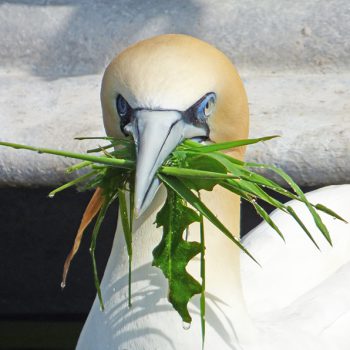
grey and white with a yellow bill
life span:
44 years
food:
small fish (lesser sandeel, sprat), scraps from fishing vessels, cuttlefish, jellyfish fleas, shrimp
threats:
mankind, via marine litter and oil spills
habitat
nests on rocky cliffs
reproduction:
maturity: 9 years
1 egg per year
nests on rocky cliffs
special nature:
spits a stinking oil at attackers
- Dut: Noordse Stormvogel (mallemok, vuilaard (B))
- Eng: Fulmar
- Fren: Pétrel Fulmar
- Ger: Eissturmvogel
- Ital: Fulmaro
- Lat: Fulmarus glacialis
- Dan: Mallemuk
- Nor: Havhest
- Frisian: Mallemok

- Fulmar, Jan Andries van Franeker
Fulmar
Fulmars can be seen flying over the North Sea the entire year. However you are only likely to see them at sea or in their breeding area off the northern coast of Northern England, Scotland or Helgoland. If they end up on a Dutch beach then they probably ran into a storm or are victims of an oil spill or marine litter. Fulmars have a strong beak with a sharp arched point, which allows them to tear off pieces of their prey. They eat just about anything found in the upper sea surface, including plastic.
- Stinking spitters
- Deep divers
- Clown on land, acrobat at sea
- Indicator for marine litter studies
- Spotted in the North Sea
- Distribution and habitat
- Protection
WWW
See also
Info
Copyright Ecomare
print