Content on this page requires a newer version of Adobe Flash Player.

Get Adobe Flash player


Search in the Encyclopedia

Fish communities in the North Sea

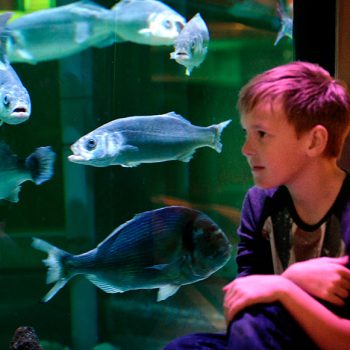
The same fish species are not found in the same quantities throughout the North Sea. There are regions where the fish fauna show similarities. In the North Sea, three different fish communities can be distinguished: the southern North Sea, the northern North Sea and the edges of the continental plate. The water depth, temperature and food supply determine which fish community is found where

  • The fish community of the southern North Sea

    The fish community of the southern North Sea consists mostly of fish which search for food on the sea floor. Dab, whiting and grey gurnard together make up more than half of the total weight in fish fauna in the southern North Sea. Gobies, dragonets and solenettes are also numerous however do not contribute as much tot he total weight of the fish fauna. Their numbers are also more difficult to estimate since they tend to escape through the nets of the researchers. Weevers, sole and dragonets all swim in both the southern and central North Sea.

  • The fish community in the northern North Sea

    In the northern North Sea (approximately the are north of the 50 meters depth line, to the Orkney Islands), haddock, whiting, cod, coal fish and Norway pout are the most common fish. There is also lots of flatfish, such as dab, witch and lemon sole. The herring probably used to contribute a lot to the total biomass of the fish fauna up till the 1970s. Presently, the herring stocks have strongly declined.

  • The fish community on the edge of the continental plate

    Close to the edge of the continental plate, the fish community consists mostly of coal fish, haddock, Norway pout, whiting, scad, blue whiting, mackerel, leng and hake.