Content on this page requires a newer version of Adobe Flash Player.

Get Adobe Flash player


Search in the Encyclopedia

Dieren en planten

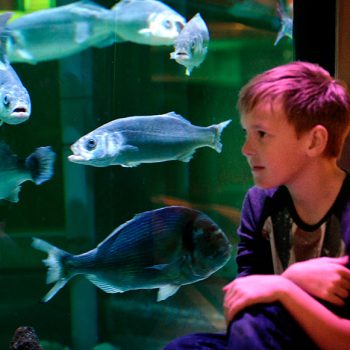
Ray's bream

size:

maximum 100 centimeters

weight:

maximum 6 kilograms

color:

back: dark green-brown
side: silver
dead: completely brown-black

age:

up to 9 years

food:

small fish, cuttlefish, shrimp and krill

enemies:

shark (such as spurdog) and large predator fish

reproduction:

lays eggs

  • Dut: Braam, oude wijven
  • Lat: Brama brama
  • Eng: Ray's bream
  • Ger: Brachsenmakrele
Bream, Ecomare

Ray's bream

Ray's bream are a maximum of 75 centimeters in length Their bodies are flattened along the sides with long pectoral fins and a deeply forked tail. They live several hundreds of meters deep in the Atlantic Ocean. Their food consists of other fish, cuttlefish and crustaceans. In the summer, they migrate along the British Islands to the north. Sometimes they lose their way due to freak ocean currents and enter the North Sea on the way back.

  • Lost in the North Sea

    Normally, the lost fish find their way to the south, through the English Channel. However, becaues they are not accustomed to sandy coasts, a sudden freeze occuring in November/December combined with a westerly wind will wash ashore the paralyzed fish, alive but helpless. In some years, there are invasions of ray's bream along the Dutch beaches. Between 1949 and 1955, hundreds of Ray's breams washed ashore along the Holland and Texel beaches. 1974 - 1976 were also prominent Ray's bream years, with a peak of 107 finds in 1976. The most recent invasion was in December 2008.

  • Distribution of Ray's bream
    Distribution of Ray's bream, Ecomare