Content on this page requires a newer version of Adobe Flash Player.

Get Adobe Flash player


Search in the Encyclopedia
  • Dut: Horsmakreel (Hors, Marsbanker, Noordewind, Poer, Poor)
  • Lat: Trachurus trachurus
  • Eng: Scad, Horse mackerel, Saurel, Rough scad
  • Ger: Stöcker (Holzmakrele, Bastardmakrele)
  • Fren: Chinchard (chinchard commun)
  • Dan: Hestemakrel
Scad, Ecomare

Scad

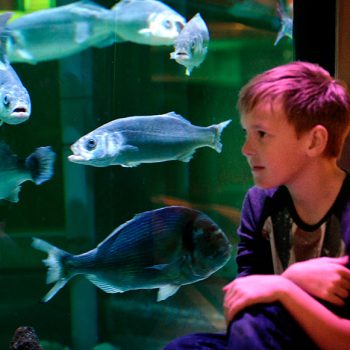
Scad grows to a maximum of 60 centimeters. It spends the winter in coastal waters from the English Channel to West Africa, and in the Mediterranean Sea. In the spring and summer, large schools of scad swim into the southern North Sea to spawn. After spawning, they spread out throughout the North Sea region. During the day, they hunt in large schools, often together with herring, upon small sea animals found in the upper water columns. At night, they spread out and sink down to the bottom.

  • More than one populations

    Three different populations of scad can be distinguished. Even though these populations can migrate over large distances, there is no mixing of the stocks, as is seen with mackerel. By far, the largest stock is the western scad. Dutch stern trawlers fish this population, particularly near Ireland and in the western part of the English Channel.

  • Distribution of scad
    Distribution of scad, Ecomare
  • Western scad stock development
    Spawning stock and yield of scad (North Sea), Ecomare

    The total international yield has risen since 1981 from practically nothing to more than 500,000 tons in 1995. The spawning stock consisted of one year class born in 1982 for around 50%. This year class provided a sharp increase in the total amount of scad up till 1988, almost 3.5 million tons. Since then, the stock has been declining quickly due to the yearly increasing yields. In 2002, the amount of adult fish from this stock was estimated at 670,000 million tons. A strong year class was born in 2001. Offspring from this year class provided a visible growth in population in 2007.