Content on this page requires a newer version of Adobe Flash Player.

Get Adobe Flash player


Search in the Encyclopedia

Dieren en planten

Mammals   Lagomorphs   Hare   Rabbit   Predators   Fox   Ferel cats   

Mens en Milieu

Hare

length:

up to 65 centimeters

weight:

up to 6 kilograms

color:

grey-brown with black tips on ears and tail

age:

up to 7 years old

food:

grass, herbs, crops, buds and tree bark

movement:

loping, running, swimming

enemies:

land predators, raptors, people

reproduction:

Mature: 6-8 months
Litter: 3-4 per year
Young: 1-8 young per nest

  • Dut: Haas (heihaas, zandhaas)
  • Eng: brown hare (common hare)
  • Fren: Lièvre (Lièvre brun)
  • Ger: Feldhase (Europäische Feldhase)
  • Nor: Hare
  • Lat: Lepus europaeus
Hare in clover, foto fitis, sytske dijksen

Hare

'To be as fast as a hare' is a very appropriate expression. When hares are chased, they can run up to 75 kilometers per hour, often making abrupt turns without slowing down. They easily jump 5 to 7 meters and are not bad swimmers either. But usually when hares are in danger, they lie stock-still, flattened against the ground. They generally only run away when danger approaches too closely.

  • Distribution and habitat
    Hare in clover, foto fitis, sytske dijksen

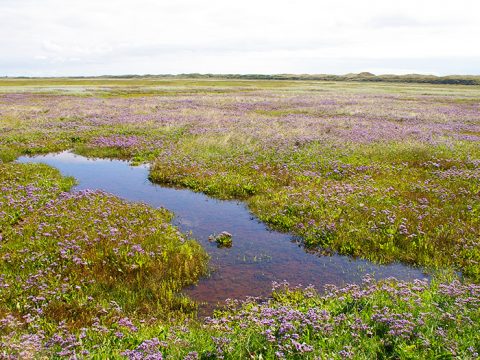
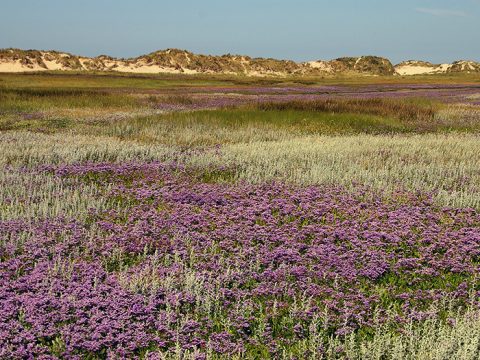
    Hares can be found everywhere, in open as well as woody areas. They are found on all of the Wadden Islands in the polders and on the salt marshes. They survive well in dune areas where rabbits have disappeared. They do not live in burrows like rabbits, but make forms. These are resting areas on the ground where they fit snugly and where the vegetation serves as a wind-screen.

  • On marshes

    Brent geese on salt marshes benefit from grazing hares. Sea plantain is their favorite food on the marsh, but this plant is often overgrown by sea purslane. Hares like sea purslane and therefore help the geese by giving sea plantain a better chance to grow.

  • Hunting
    Hare on Texel, foto fitis, sytske dijksen

    Due to the damage they cause to (agricultural) crops, hares are allowed to be hunted from 15 October till 31 December. Outside of this period, licenses for hunting hares are only given for incidental damage.

Hare on the salt marsh