Grey seal
size:
Male: maximum 2.60 meters
Female: maximum 2 meters
weight:
Male: maximum 350 kilogram
Female: maximum 200 kilogram
color:
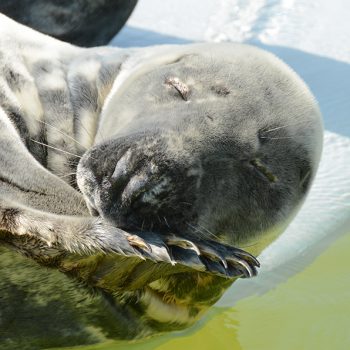
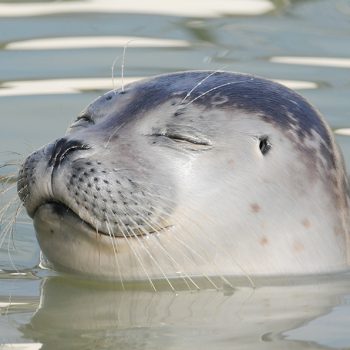
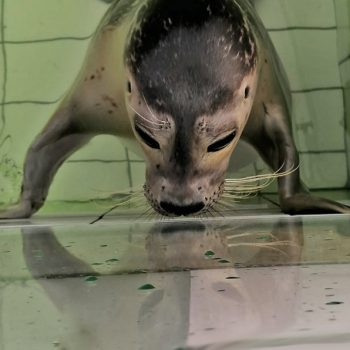
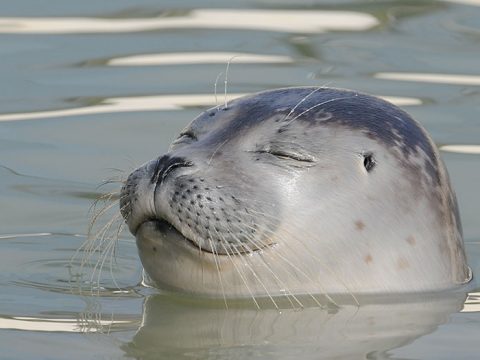
Dark grey with black spots. Females are lighter than males. Newly born have long grey hair.
age:
Maximum 50 years
food:
Particularly fish, but also shellfish and crustaceans, and occasionally a bird
movement:
Swimming and hobbling
enemies:
Humans (disturbance, hunting and by-catch in fykes and fishing nets)
reproduction:
Mature: between 3 to 8 years old
Pregnancy: 11 months
Birthing season: December/January
- Dut: Grijze zeehond (kegelrob)
- Eng: Grey seal
- Fren: phoque gris
- Ger: Kegelrobbe (Grauer Seehund)
- Lat: Halichoerus grypus
- Dan: Grisælen
- Nor: Havert, Grisel

- Grey seal, Ecomare
Grey seal
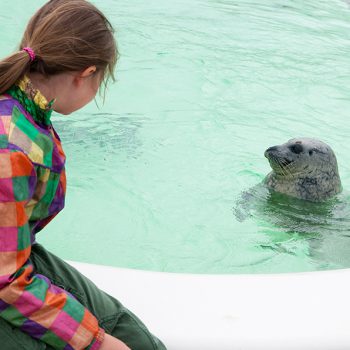
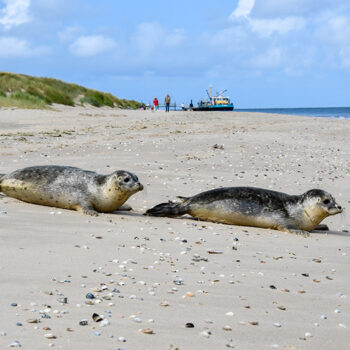
Grey seals are true sporters. They easily swim from the Wadden Sea to England and back again.They are less shy and much more curious than harbour seals. The pups are born in the middle of the winter on undisturbed sandbanks in the Wadden Sea. The vicious wind blows constantly in their faces but these tough young animals have a thick white winter coat during their first few weeks to protect them.
On Texel

- Jonge grijze zeehond in de opvang, Ingrid de Porto
Since 2000, a group of around 50 grey seals have been living on and around the western part of the Razende Bol (Noorderhaaks), a sandy island southwest of Texel. That's why this part of the island is now closed to the public.
Every winter, young grey seals are found along the coast of Texel. They are usually brought to Ecomare. Ecomare also has three grey seals in its permanent population.
- Distribution and habitat
- Inland waters
- Population in the Netherlands
- Christmas kids
- Protection
- Flight elevations for grey seals
See also
Info
Copyright Ecomare
print