- Dut: Weidewasplaat
- Lat: Hygrocybe pratensis var. pratensis
- Eng: Meadow Waxcap
- Ger: Wiesenellerling
- Dut: Granaatbloemwasplaat
- Lat: Hygrocybe punicea
- Eng: Crimson Waxcap
- Ger: Größter Saftling
- Dut: Geurende wasplaat
- Lat: Hygrocybe russocoriacea, Cuphophyllus russocoriaceus
- Eng: Cedarwood Waxcap
- Ger: Juchtenellerling
- Dut: Scharlaken wasplaat
- Lat: Hygrocybe coccinea
- Eng: Scarlet waxcap
- Ger: Kirschroter Saftling
- Dut: Sneeuwzwammetje
- Lat: Hygrocybe virginea var. virginea
- Eng: Snowy Waxcap
- Ger: Schneeweißer Ellerling
- Dut: Rafelige parasolzwam
- Lat: Macrolepiota excoriata
- Eng: Frayed parasol mushroom, Lepiota excoriated
- Ger: Ackerschirmling
- Dut: Sikkelkoraalzwam
- Lat: Clavulinopsis corniculata
- Eng: Meadow Coral
- Ger: Gelbe Wiesenkoralle
- Dut: Adonismycena
- Lat: Mycena adonis
- Eng: Scarlet bonnet
- Ger: Korallenroter Helmling
- Dut: Elfenwasplaat
- Lat: Hygrocybe ceracea
- Eng: Butter waxcap
- Ger: Zerbrechlicher Saftling

- Meadow waxcap, Sytske Dijksen, www.fotofitis.nl
Mushrooms on scanty grasslands
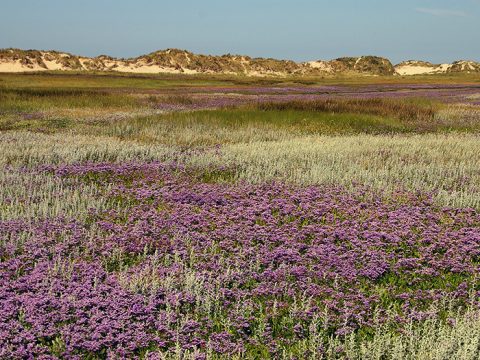
Mushrooms also grow on scanty grasslands, dune fields, roadsides and dikes. On the Wadden Islands, these are where you are likely to find waxy caps. Nature-lovers interested in mushrooms come from far away to spot these striking phenomena. The names alone make these beauties a curiousity! Parrot waxcap, scarlet hood, snowy waxcap ... The olive earthtongue (Microglossum olivaceum) is also found on the same grasslands as waxcaps. It is an indicator of ancient unfertilized grasslands. It is a threatened species so the Vlielanders were very happy when it was found on their island in early November 2011.
print