- Dut: Rendiermos
- Lat: Cladonia rangiferina
- Eng: Caribou moss, Reindeer moss
- Ger: Rentierflechte
- Dut: Elandgeweimos, Zomersneeuw
- Lat: Cladonia foliacea
- Ger: Blättige Cladonie
- Dut: Rood bekermos
- Lat: Cladonia coccifera
- Dut: Gevorkt heidestaartje
- Lat: Cladonia furcata
- Dut: Rode heidelucifer
- Lat: Cladonia floerkeana
- Dut: Varkenspootje
- Lat: Cladonia uncialis
- Ger: Igel-Cladonie
Lichen species in the dunes
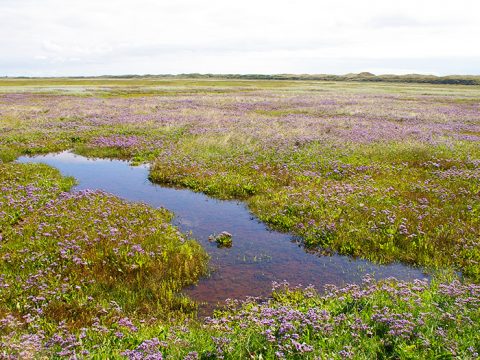
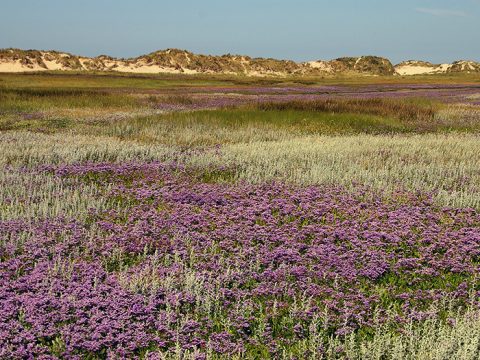
The dunes are a difficult environment for most plants to grow. The open sandy surfaces don't offer much in the way of water or nutrients. Because lichens receive the majority of their needs from the air, such undesirable places for plants are exactly what lichens need: minor or no competition from others for light! In the dunes, lichens don't just grow on the ground. You also find them on trees and brick paths or stone buildings. However, compared to other types of nature areas, most dune lichen species are ground specialists. The most common species are the reindeer mosses and cup lichens. Unfortunately, very few of these species have common English names.
- Caribou moss (reindeer moss)
- Cladonia foliacea
- Cup lichen: Cladonia coccifera
- Cladonia furcata
- Cup lichen: Cladonia floerkeana
- Cladonia uncialis
See also
Info
Copyright Ecomare
print