Content on this page requires a newer version of Adobe Flash Player.

Get Adobe Flash player


Search in the Encyclopedia

Brass buttons

size:

10 to 50 centimeters

color:

flowers: yellow
stems: light green to red-brown

blossoms:

July-October

reproduction:

seed spread also by birds and water

life span:

annual

  • Dut: Goudknopje
  • Lat: Cotula coronopifolia
  • Eng: Brass buttons
  • Ger: Laugenblume
  • Dan: Firkløft
Brass buttons, foto fitis, sytske dijksen

Brass buttons

Brass buttons is originally from South Africa. It grows primarily along coasts. It has only been found in the Netherlands since 1972, first in Flevoland and eventually along the shores of Groningen, Friesland and the Volkerak Locks in Zeeland. Since recently, it has also been found more inland, such as in the Zaanse Schans. Brass buttons used to grow on some of the German and Danish Wadden Islands. Up till recently, there were no known growing areas on any of the Wadden Islands. In 2004 it was found in the nature area Waalenburg and the Hoornder Nieuwland on Texel. 

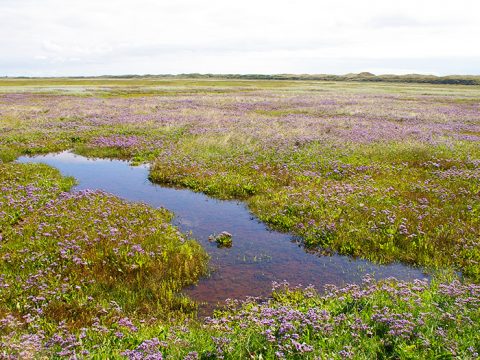
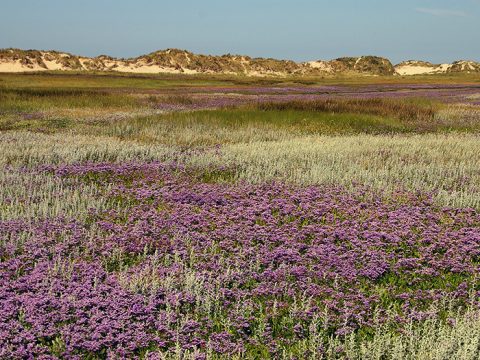
Field full of brass buttons


, Foto Fitis, www.fotofitis.nl

Suddenly it was there. A huge field of brass buttons in the nature area Waalenburg. Not all that strange if you realize that the seeds are often spread by birds such as geese. While grazing in muddy areas, the seeds stick to their feet and when they land elsewhere, the seeds rapidly germinate. Waalenburg is known for its geese and other water fowl.

  • Habitat
    Brass buttons, foto fiits, sytske dijksen

    Brass buttons is a pioneer plant, found on brackish to silty clay and peat soils which stand under water in the winter and are dry but not dried up in the summer. Water fowl and shore birds help to spread the seeds by carrying the fruits in their mud-covered feet.

    The seeds will not germinate in water. This can be a saving grace during severe winters. The seeds are the only part of the plant that will survive the cold. Should new plants form in the autumn, they will be killed if the temperatures drop below freezing. However, seeds covered in water will survive to germinate in the spring. The seeds remain vital for a year, so as long as the ground stays moist, brass buttons will grow. If the soil dries up, brass buttons will disappear.