Content on this page requires a newer version of Adobe Flash Player.

Get Adobe Flash player


Search in the Encyclopedia

Water en land

Sea aster

size:

plant: 30 to 150 centimeters
flower: 0.8 to 2 centimeters

color:

lilac with yellow heart

blossoms:

July through September

pollination:

insects

reproduction:

seed spread by wind and water, rootstock

life span:

biennual or perennial

  • Dut: Zeeaster (zulte, lamsoren)
  • Lat: Aster maritime
  • Eng: Sea aster
  • Fren: Aster maritime
  • Ger: Strand-Aster
  • Dan: Strandasters
Sea aster, foto fitis, sytske dijksen

Sea aster

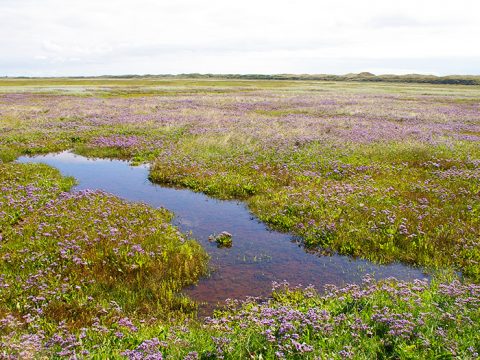
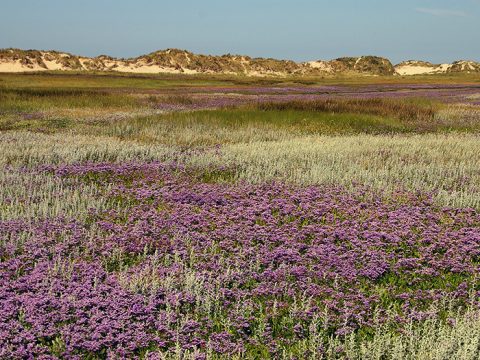
Sea aster is a very tasty plant. Beside the many bee species which drink the nectar and spread the pollen, birds such as finches and  buntings eat the nutty seeds, sheep like the flowers and brent geese eat the fleshy leaves and stems. Sea aster is also cultivated as a silty sea vegetable for humans. The hardy seeds can stay afloat up to two weeks before settling. In order to germinate, they need either rainwater or water with a very low level of salt. Afterwards, saltwater is sufficient for further growth. This gives the plant the opportunity to grow in places where most plants can't. That is fortunate for sea aster, because it doesn't grow well if there is too much competition.

  • Habitat
    Sea aster, foto fitis, sytske dijksen

    Sea aster is a plant for salty and brackish soils. It can grow in massive numbers especially on muddy salt marshes. It it also grows inland in brackish water ditches and other areas with salty seepage. On the banks of the Dollard, sea aster reaches height as tall as man. Sea aster is cultivated in Zeeland as a silty sea vegetable and sold under the name 'lamsoor'. That can be very confusing since wild lamsoor is actually sea lavender, which is absolutely inedible.

  • Indispensible source of food
    caterpillar of Cuccula asteris, foto fitis, sytske dijksen

    Sea aster is an important source of food for at least 20 species of insects. Ten of these species are sea aster specialists, which means they can't live without it. Moths, butterflies, flies, aphids, beetles, bumblebees, wasps and bees. The solitary bee Colletes halophilus (Plasterer bee) is also one of the specialists. The plasterer bee digs nests in sandy dunes and literally plasters the cell walls with saliva. This gives it a silky look, which is where the Dutch name for this bee comes from: 'marsh silk bee' or schorzijdebij.