Content on this page requires a newer version of Adobe Flash Player.

Get Adobe Flash player


Search in the Encyclopedia

Dieren en planten

Water en land

Mens en Milieu

Annual seablite

size:

10 to 50 centimeters

color:

flower: greenish
leaf: blue-green

blossoms:

July through September

pollination:

self and cross-pollination, by wind and insects

reproduction:

seed, spread by wind

life span:

annual

  • Dut: Schorrenkruid
  • Lat: Suaeda maritima
  • Eng: Annual Seablite
  • Fren: Sueda maritime
  • Ger: Strand-Sode
  • Dan: Strandgisefod
Annual seablite, foto fitis, sytske dijksen

Annual Seablite

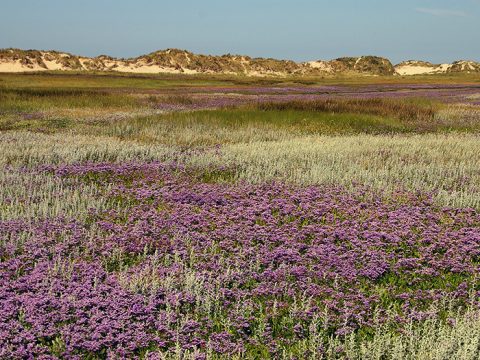
Annual seablite is an excellent plant for salty areas, such as salt marshes. Its family member salicornia is the first land plant to grow in the lowest part of the tidal zone; annual seablite is the next plant just a bit higher up. These two plants have a lot in common. They both catch mud and help build up the marsh. And their leaves absorb a lot of salt and eventually turn red when oversaturated. Should you extract the salt in the leaves of either plant and let it dry, it turns black. This explains annual seablite's latin name Suaeda, which comes from Arabic and means black salt.

  • Distribution and habitat
    Annual Sea blite, foto fitis, sytske dijksen

    Annual seablite is found along coastal regions throughout most of the world, including the Netherlands. It grows between the highest section of the muddy tidal zone up to the lowest part of the overgrown marsh. It needs a lot of nitrogen, which it finds in a flood mark of decayed green and red seaweeds. You sometimes find annual seablite growing profusely inland of the dikes, but then you can assume the land was once a salt marsh. It won't last once the salt is leached out.

  • Tumbleweed
    Annual sea blite, foto fitis, sytske dijksen

    Just like many other members of the goosefoot family, annual seablite can turn into a tumbleweed when it dies. Only large plants growing in open areas qualify. If the conditions are right, the plant not only tumbles over the surface and spreads its seeds, it tends to catch seeds of other plants along the way. When the plant eventually stops tumbling and the seeds fall to the ground, a rich flora can result the following year.