Salicornia
size:
saltwort: 2 to 40 centimeters
glasswort: 5 to 30 centimeters
color:
flower: yellow
plant: dull green
blossoms:
July through October
pollination:
self and cross-pollination,via wind and insects
reproduction:
seed spread by wind or water
life span:
annual
- Dut: Zeekraal, langarige en kortarige
- Lat: Salicornia procumbens, Salicornia europaea
- Eng: Salicornia, Saltwort (long-spiked) and Glasswort (short-spiked); Marsh Samphire, Pickleweed, Chicken-claws
- Fren: Salicorne; Passepierre
- Ger: Sandwatt-Queller (Langähriger) und Queller (Kurzähriger)
- Dan: Salturt

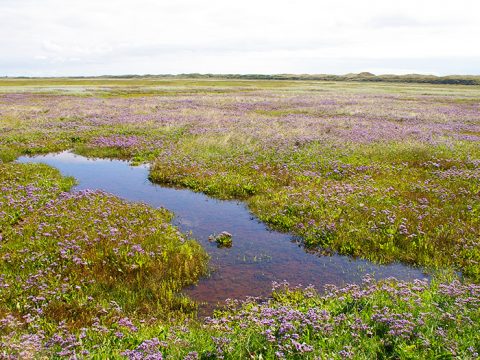
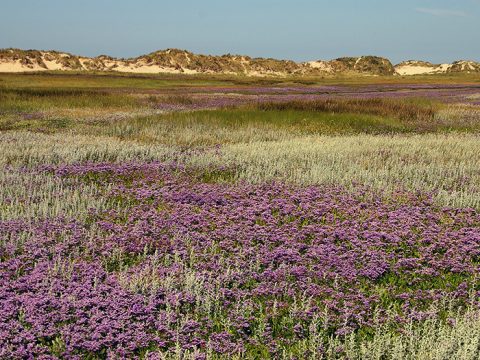
- Salicornia, foto fitis, sytske dijksen
Salicornia
A distinguishable halophyte, salicornia is the pioneer plant of salt marsh vegetation. It grows on muddy stretches which flood during high tide. Salicornia growth enhances mud deposition and thereby helps the marsh to grow higher and dryer. Because of its salt tolerance and its tastiness, it is also cultivated as a silty sea vegetable on land where there is salty seepage. Although it grows well in saline environments, it will only germinate with the help of fresh rainwater. Two practically identical species are found in the Netherlands, saltwort and glasswort.
Op Texel

- In de Slufter, Ecomare, Oscar Bos
Both saltwort and glasswort are common in the lower parts of the Slufter valley. They are also found along the Mok Bay and on the Schorren salt marsh. Salicornia is not cultivated anywhere on the island for commercial harvesting. There is a farmer by the Hoornder Nieuwland who tried, however it wasn't profitable and has since stopped.
WWW
See also
Info
Copyright Ecomare
print