Content on this page requires a newer version of Adobe Flash Player.

Get Adobe Flash player


Search in the Encyclopedia

Dieren en planten

Water en land

Delta region   Delta Works and nature   

Mens en Milieu

Noord Beveland, foto fitis, sytske dijksen

Upheavals in the nature due to the Delta Works

An unintended side effect of the Delta Works caused major changes in the nature of the outer dike grounds of the Goeree-Overflakkee and the sea inlets Haringvliet and the Grevelingen. When the tides disappeared, the force which had been forming new land for centuries also disappeared. As the flood changed into ebb, the sea on the outer dike flats left a layer of mud behind. After a period of time, the grounds had been so elevated that they could be diked in. Deposition of mud against the new dike began, and in this way was land accumulated.

  • Drained and overgrown
    Grazed fields on Tholen, foto fitis, sytske dijksen

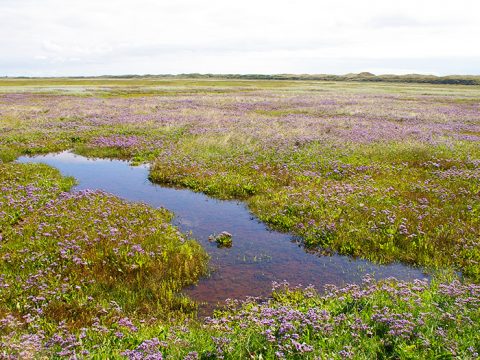
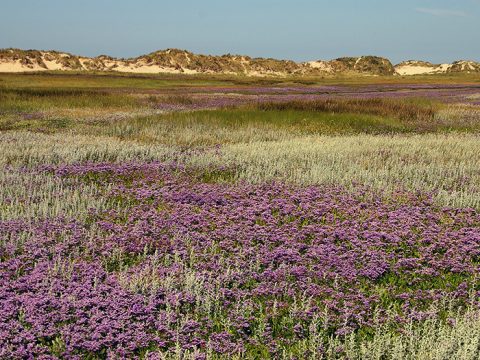
    The mud flats became permanently exposed after the sea inlets were closed. Those flats where man no longer interferes are slowly becoming overgrown with bushes from elderberry, willow and sea buckthorn. However, a large part of the outer dike grounds are being grazed. The Grevelingen changed from saline to brackish with a stable water level (twenty centimeters below NAP). There is a sluice in the Brouwersdam which allows seawater to enter.

  • Clearer water
    Grevelingen, foto fitis, sytske dijksen

    The Grevelingen water is much clearer than it used to be, since the mud particles can subside to the bottom more quickly now that the turbulence from ebb and flood has disappeared. For fish-consuming birds, this has become an attractive foraging area (grebe, common goldeneye, cormorant). Thanks to the clear water, the sunlight now reaches the bottom, which is slowly being covered with a thick carpet of eelgrass. Winter guests such as geese and swans are very keen on eelgrass. They arrive in the Grevelingen in large numbers. Waders nest on the grassy mud flats, since they have no reason to fear rising water.

  • Fresher and wilder
    Haringvliet near Tiengemeten, foto fitis, sytske dijksen

    The Haringvliet has become a totally freshwater lake. The narrow outer dike grounds became overgrown with reed and now offer nesting opportunities for the grebe and marsh harrier. Many species of flora and fauna have prospered since the sea inlets were closed, however others have suffered. The sea inlets were hatcheries and nurseries for young fish (sole, cod, plaice) that remained in the safe bays until they were large enough to depart for the open sea. This function has been lost. Furthermore, the salt-loving vegetation on the mud flats disappeared and the reed has grown wild, making it less attractive for reed birds. Life has also become more difficult for the birds that lived off of the smaller animals left remained behind on the flats after ebb (oystercatcher, dunlin, avocet).