Content on this page requires a newer version of Adobe Flash Player.

Get Adobe Flash player


Search in the Encyclopedia

Dieren en planten

Water en land

Danish wadden region   Mandø   

Mens en Milieu

Mandø, Foto Fitis, www.fotofitis.nl

Mandø

Mandø is the smallest inhabited wadden island of Denmark and lies between Rømø and Fanø. It has a surface area of eight square kilometers. The island is almost totally surrounded by a dike. It is a peaceful island since it cannot be accessed during high tide. One can reach the island via two roads, which are only accessible during low tide. They are called the 'ebbewegen': the Liningsvejen and the Ebbevejen. Around 70 people live on Mandø.

  • Very little protection
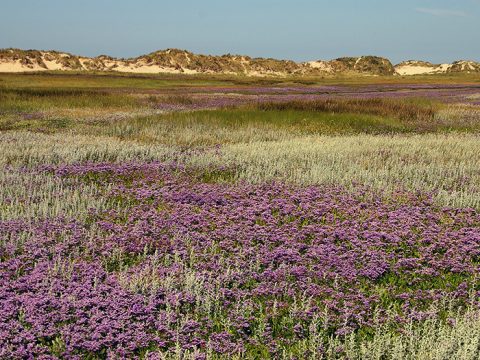
    Dunes on Mando, foto fitis, sytske dijksen

    Mandø only has dunes on the west side of the island, several rows around 100 to 200 meters wide. These dunes protect the residents in the present village from the sea. Otherwise, there is a dike to protect the lower lying pastures from flooding. Along the Liningsvejen, land has been reclaimed with the help of osier branches and ditches.

  • Geological history
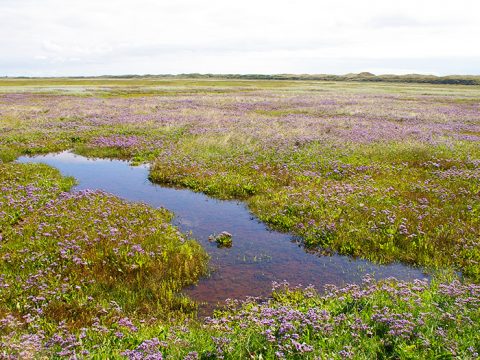
    plains on Mando, foto fitis, sytske dijksen

    In the mid 1930s, Mandø was made up of two islands, connected together by a dike. Originally, Mando would have been much larger.

  • Points of interest on Mandø
    Mando, windmill, foto fitis, sytske dijksen

    In the Mandø Centret' is an exhibit about the island. The captain's home "Mandhuset' built around 1831 is located in Mando and is now a regional museum. Furthermore, Mandø has a church dating back to 1639 and an old windmill from 1860. More than 300 different species of birds on the island can be observed in the exhibit 'Ornitologisk Samling'. There is an information board on the seaside of the dunes, which also shows how high the water level was during the tidal flood of 1634.

  • Transportation
    Bus to Mandø, Foto Fitis, www.fotofitis.nl

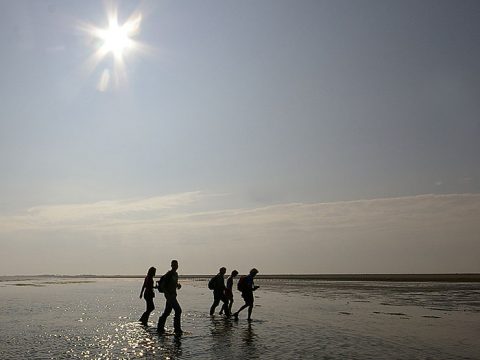
    The 7-kilometer long Liningsweg runs through the mud flats of Vester Vedsted to Mandø. The dam is low and covered with water during high tide. The high tide level determines how much time there is to cross the causeway. In the summer, depending upon the tide, there is a daily bus from Vester Vedsted to the island; it only rides in the winter when previously arranged. The bus takes 35 to 45 minutes.
    There is a second way to get to Mandø, using the more southerly located Mandø Ebbeweg. However, no cars are allowed here. The road is marked by willow branches. There is a good risk of being surprised by high tide flood when not well informed.

  • History of Mandø
    low tide, foto fitis, sytske dijksen

    Mandø is mentioned for the first time in literature in 1231. The island belonged to the former king of Denmark. In the 15th and 16th century, Mandø was a prominent fishing area. In the 16th century, the island was plagued by several heavy floods. The former village and church was located on 'Gammel Mandø' (old Mandø). These were destroyed by a storm in 1634, and the island residents moved to their present residence in the higher lying dunes. Fisheries ended here in the 17th century. In 1741, the king sold the island to the residents. The men earned their money in shipping while the women were the farmers.

  • Dikes
    Tidal road, foto fitis, sytske dijksen

    There are two dikes on Mandø: one for protecting the village (dating back to 1887) and a sea dike (built between 1935-1937). There are some farms from the 1950s located outside of the 'village' dike. These farms incurred immense damage during the heavy storms in 1981, when the sea dike broke. The village residents in the dunes were luckier...
    The creek 'Große Rinne' used to divide 'Gammel Mandø' from the southern part of the island, until the entire island was diked in 1938. Mandø's 'Weele' was formed during the flood of 1923.