Content on this page requires a newer version of Adobe Flash Player.

Get Adobe Flash player


Dutch wadden region

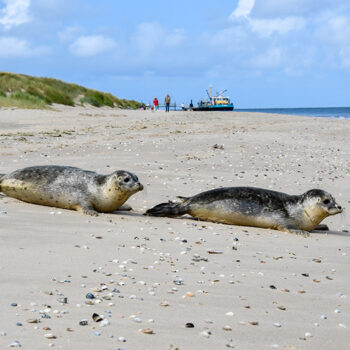
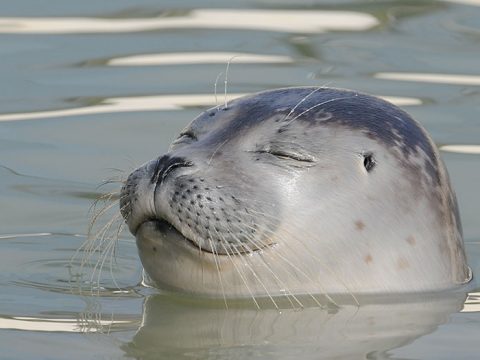
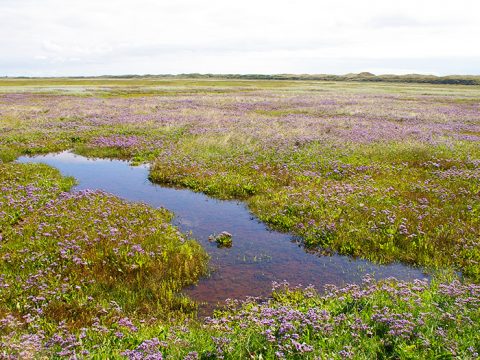
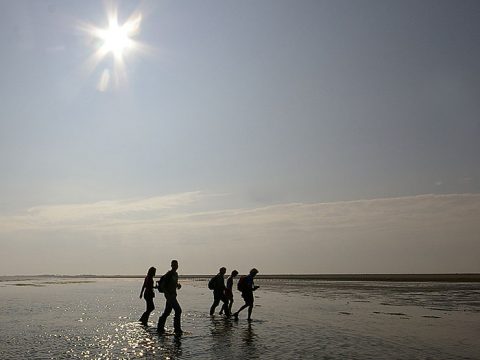
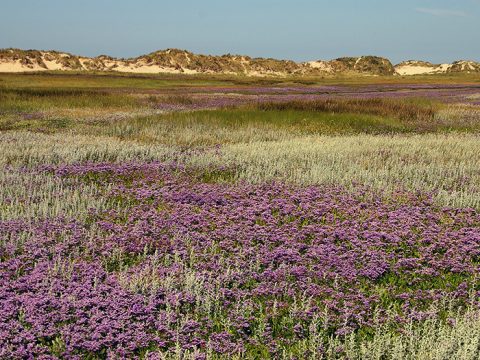
The Dutch wadden region is bordered by a row of five inhabited and two uninhabited islands. The Afsluit dike forms the solid border with the freshwater IJsselmeer. The sea dikes along the Dutch, Frisian and Groningen coast protects the sea clay regions which formed when the marshes were reclaimed into polders. The Ems-Dollard estuary lies in the east. The difference between high and low tide on the Dutch tidal flats is not much (one to two meters), whereby lots of sand and mud can precipitate. This means lots of exposed banks, which is good for seals and tidal flat birds.

  • Facts Dutch Wadden Islands:
      Texel Vlieland Terschelling Ameland Schiermonnikoog
    Length (km) 23.7 12 30 28 18
    Width (km) 9.6 2 3.5 2.5 3
    Land surface (ha) 16,328 4056 8935 2730 3994
    Water surface(ha) 42,500 27994 58465 21543 15125
    Bicycle paths (km) 135 26 70 100 30
    Number of visitors 2003 922,000 140,000 500,000 554,000 300,000
    Length of beach (km) 28 12 20 27 18
     
  • Formation of the present coastline
    North-Netherlands around 1200, Texel 3200 years ago

    Around 1200, the Dutch wadden region began by the dunes of Schoorl. Callantsoog ('t Oghe) was the first wadden island. The Zuiderzee, the Frisian Middle Sea and the Lauwersmeer were inseparably bonded with the region and the Dollard did not exist. The coastline of the present-day wadden region is the result of a long history of land reclamation, other water works and flood disasters whereby the sea won back the land.