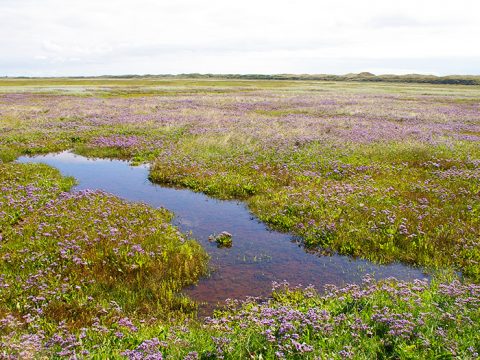
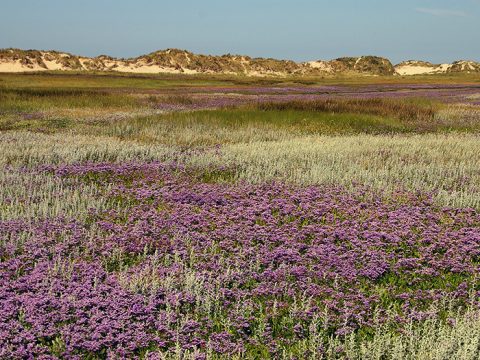
Homes were built on the old beach ridges, the dunes and the present polder regions. Natural water seepage out of the dunes gathered between the 'permanent' dunes and these beach ridges and dune complexes. The areas along the inner dune edges were somewhat marshy, forming layers of peat on the bottom. These wet and fallow areas in particular were used to grow hay. Terschellingers called them 'mieden' and they were characterized by an immense richness in plants and herbs. They were magnificently colorful fields of flowers. The farmer cut the grass with a scythe in the summer.
Pieces of land in the wet areas where the mieden stood were often surrounded by belts of alder. Because one did not earn enough from the mieden, they were not preserved and practically disappeared due to improved water management in the 20th century. The Kooibosjes are the only remaining pieces of 'mieden' on Terschelling.