Content on this page requires a newer version of Adobe Flash Player.

Get Adobe Flash player


Search in the Encyclopedia

Dieren en planten

Water en land

Nature on Terschelling   Noordsvaarder   

Mens en Milieu

Griltjeplak, foto fitis, sytske dijksen

Noordsvaarder

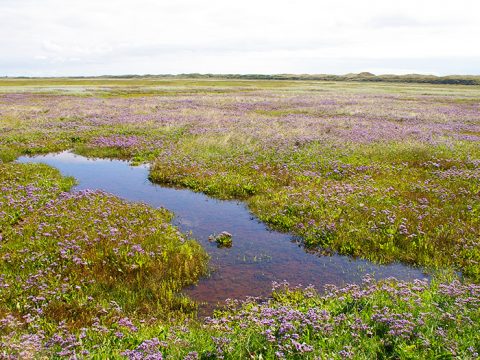
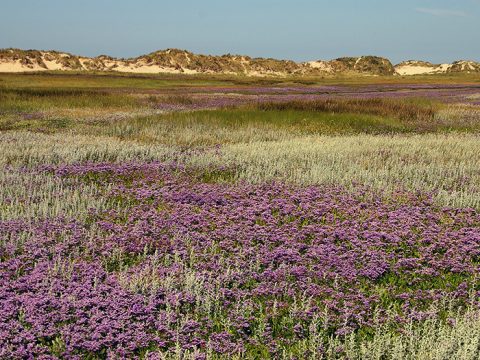
The Noordsvaarder is a region of beach plains, salt marshes, drift-dunes and primary dune valleys. A complete succession of plants can be followed starting with pioneer vegetation. The developing vegetation attracts many birds and butterfly species. New dunes and salt marshes are still forming. The Kroonpolders and Griljeplak are part of the Noordsvaarder.

  • State nature monument
    Noordsvaarder, foto fitis, sytske dijksen

    The Noordsvaarder has been a State Nature Monument since 1924. The 650-hectare nature area includes the beach plain west of West-Terschelling plus the entire dune region northwest of the bicycle path through the village dunes to Pole 8.
    The Noordsvaarder is a region of beach plains, (young) salt marshes, drift-sand dunes and dune lakes. It is particularly a region with primary dune valleys, wet, damp and dry. The entire plant succession can be observed: from pioneer vegetation via all kinds of intermediate stages to vegetation in a final stage. More and more kinds of bird species have been discovering the Noordsvaarder over the past several decades thanks to the developing vegetation.
    Dune and salt marsh formation processes can still be found.

  • Previous military training grounds

    The Noordsvaarder used to be used as a military training ground. However since July 1995, all training has been transferred to the Vliehors on Vlieland.
    When the last training took place on the Noordsvaader, the Waddenvereniging requested a ground pollution check on both shooting terrains. In the meantime, arrangements have been made to clean up the grounds on the Noordsvaarder, but the Vliehors is still not in the planning. According to the Waddenvereniging, because the Vliehors was used three to four times more intensively than the Noordsvaarder, the pollution in 1995 was much more serious. The clean-up plan for the Noordsvaarder have shown extensive pollution from oil and cadmium. The cadmium probably came from the paint on the rockets, which were fired at the Terschellinger training grounds since the 1950s.