Content on this page requires a newer version of Adobe Flash Player.

Get Adobe Flash player


Texel, foto fitis, sytske dijksen

Nature on Texel

Texel is known in particular as a bird island. However, Texel's nature has much more to offer than just birds. Approximately one third of the surface on Texel is nature reserve. Many unusual plants and animals are also found outside of these reserves. There are still things to be discovered in the nature on Texel. New species are reported practically every year.

  • Nature areas on Texel

    You find lots of different kinds of nature areas on Texel: sandy plains such as the Hors and the Razende Bol (the name the Texelaars use for Noorderhaaks), salt marshes and tidal flats as found in the Mok Bay and on the Schorren, dunes such as the Geul, th Bollekamer and the Muy, and old marsh creeks and meadow bird reserves in the polder, such as Waal and Burg. The entire dune and woods area on the western side of the island is National Park.

  • The North Sea
    North Sea coast, foto fitis, sytske dijksen

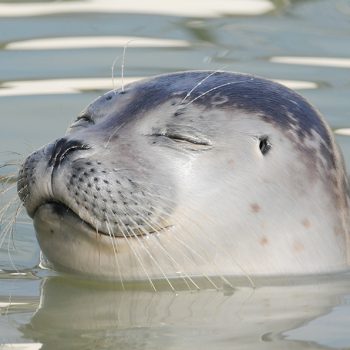
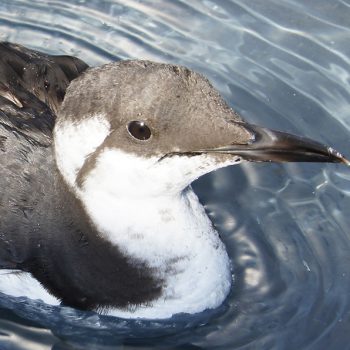
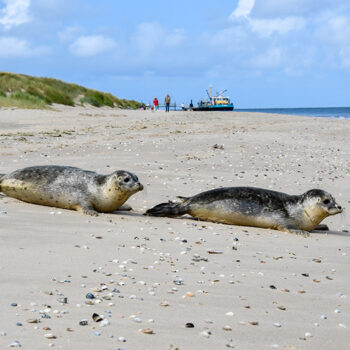
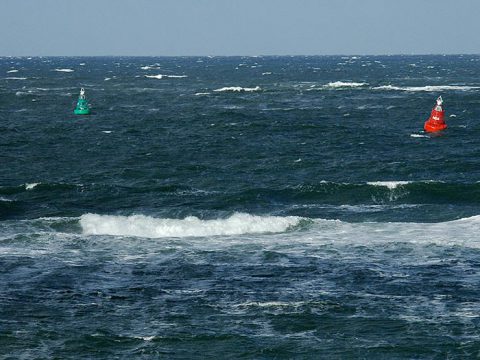
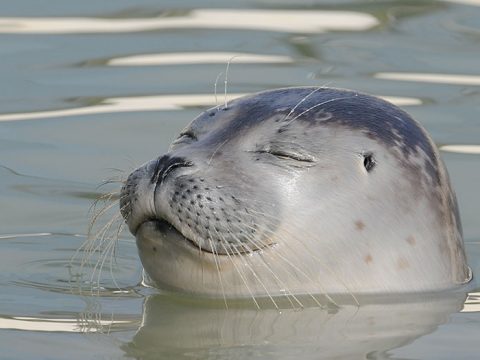
    The Netherlands' largest nature area, the North Sea, borders Texel in the west. The island visitor only sees a part of it, from the beach. Particularly during storms, seabirds come as close as the beach. It's not unusual to see seals swimming and in the winter, with a bit of luck, even a porpoise. The sea divulges its richness particularly in the form of washed up articles on the beach. Not only shells but also seaweeds, crabs, jellyfish and occasionally a spectacular stranding of a marine animal, such as whales.

  • Salt marshes around Texel
    Schorren, foto fitis, sytske dijksen

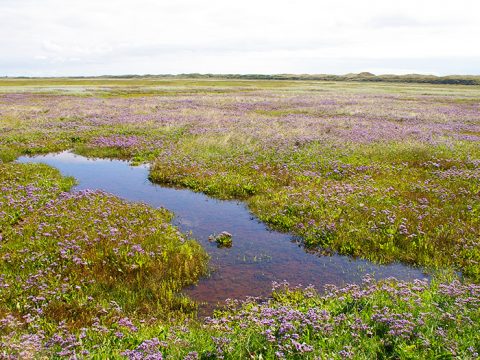
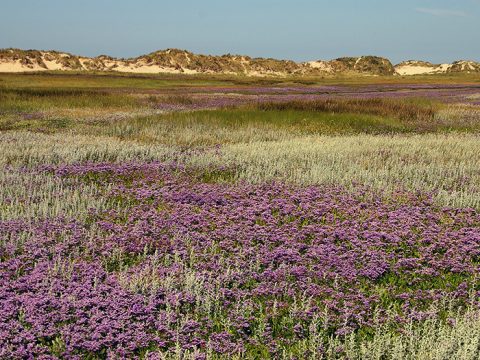
    Salt marshes are pieces of land usually located on the seaside of the dike. They only flood with seawater during extremely high floods. Only plants resistant to a salty bath can grow here, and those are very unusual plants. They have strange but lovely colors: purple, very light green and bright red in the autumn. The largest marshes on the island are the Schorren, located along the wadden dike north of Oosterend, and the Slufter, located in an open dune slack on the North Sea side. The Slufter is unique because it is located on the landside of the sea dike. Smaller pieces of salt marsh lie along the edge of the Mok Bay, close to the TESO harbor, and north of De Cocksdorp.

  • The dunes

    The dunes on Texel can be divided into four different parts. From north to south, you have the old Eierlandse Dunes, the young dunes between De Koog and the Slufter, the old dunes between De Koog and Den Hoorn and the young dunes by the Hors.
    The Eierland dunes in the north are old and contain very little calcium. There is a large variation in wet and dry dune grasslands, well known for the unusual migration birds that forage there. The area is also rich in lots of moss and lichens grow.
    Where the Slufter and Muy now lie used to be a sea channel in the 16th century. That is why the dunes in this area are relatively young. Sand dikes have been constructed, with grasslands rich in birds. The Muy pond is located in the middle of the area, known for its spoonbill and aalscholver colonies. The dune slack the Buitenmuy lies to the west, where you find unusual plants, including orchids.
    The oldest dunes on Texel lie between De Koog and Den Hoorn. They are as old as 1000 years. The tallest dunes are also found here, up to 25 meters elevation. Sea buckthorn grows profusely in the youngest most westerly lying slacks. Lots of heather grows in the sheltered eastern slacks. The dunes further to the east have changed into scanty, sand-blown 'mient' grounds. In olden times, poor farmers let their livestock graze there. Since 1900, the area was planted massively with pine trees.
    The youngest dune landscape lies southwest of Den Hoorn, formed after the sandbar Onrust attached itself onto Texel in 1900. This led to the formation of the Hors, where the process of dune formation can still be followed. The Geul also formed in this period, an impressive dune slack with a large spoonbill colony and many botanic curiosities.

  • Woods on Texel

    Texel has several woody areas, particularly along the inner dune border. The largest woods is called the Dennen. The Dennen was planted in the beginning of the 20th century between Den Hoorn and De Koog, mostly black pines with occasional coniferous trees. The purpose was to protect the farmland located close to the dunes from wind-blown sand and to produce wood for the mining industry. However, salty sea winds and infertile soils prevented the trees from growing well. The woods are now particularly important for recreational purposes. You also find forest birds and unusual mushrooms, which can only live or grow on the island because of the woods. There are playgrounds and open nature areas between the wood lots. Two other woody areas are the Krimbos, located outside of De Cocksdorp, and the Doolfhof on the Hoge Berg. The Krimbos was planted around 1970 and the Doolhof dates back to the 18th century. Both were planted for recreation.

  • The lateral moraine of Texel

    The old land on Texel lies between the Klif in Den Hoorn and the village Oost. It is a rolling landscape. It is a lateral moraine dating back to the next to last glacial period, around 150,000 years ago. Southeast of Den Burg lies the widest and tallest part of the moraine. Its highest elevation is the Hoge Berg with 15 meters elevation. This part of Texel has the longest history of inhabitancy, since the last glacial period ended 10,000 years ago. Several examples of cultural historical monuments from the past three centuries can be find in this countryside : garden walls (tuinwallen), drinking holes (kolken), sheep sheds (schapenboeten) and old farmhouses (stolpen).

  • The old polders
    old polders near De Waal, foto fitis, sytske dijksen

    Since the 14th century, the residents on Texel started building dams around the marshy land, beginning in De Koog. Later on, polders were added around the lateral moraine and Den Hoorn. The largest of the old polders is Waal and Burg, reclaimed in 1610. The old polders in the west are covered with drift sand, making it suitable for growing bulbs. The other old polders are used mostly as pastures.
    Many of these lands are marshy and therefore are too wet for the farmers. However, the conditions for meadow birds are excellent, as seen in Waal and Burg, Dijkmanshuizen and Büttikofers Mieland.

  • The new polders

    The polders Eijerland, Prins Hendrik, the Eendracht and 'het Noorden' were developed in the course of the 19th century and gave Texel its present shape. The land allotments in these young polders are large-scale and rectangular in shape. The farmhouses in the open countryside are often surrounded by wooded groves. Much of the land is used for growing crops. Many geese and Bewick's swans are found on these polders in the winter. There are even several small nature areas here, particularly along the former tidal creeks.

  • The brackish lands
    de Bol, foto fitis, sytske dijksen

    On the landside of the wadden dike, there are a number of small nature areas where lots of seawater seeps under the dike. This makes the ground unsuitable for agriculture however is all the more interesting for nature lovers. To name a few examples, the brackish conditions are responsible for the richness in fish and birds in the Roggesloot, the fields of orchids in the Bol and an excellent forage and nesting area for terns and avocets in Waagejot, Ottersaat and the Petten.
    There is a brent goose reserve in the northern part of Eierland. The land is farmland in the summer but for the geese in the winter. Farmers in the vicinity are permitted to chase away brent geese from their land so that the birds eventually find the land where they are welcome.

  • Plants on Texel

    Each of the various nature areas on the island accommodates their own characteristic flora. For example, you find the first dune-builders sand couch and sea sandwort on the beach plains. Marram grass, sea holly and sea rocket grow in the beach ridges. Many rare plants such as grass of Parnassus and orchids grow in the young dune slacks. The older dunes are mostly covered with heath, but you also find marsh gentians and sundew. Typical salt marsh vegetation, such as salicornia and sea lavender, grows in the Mok Bay, the Slufter and on the Schorren.

  • Insects and spiders on Texel
    Zandkuil, foto fitis, sytske dijksen

    The variation in nature areas also means lots of different species of insects. During an insect inventory on Texel in June 2005, more than 1117 species were reported! There were 543 species of beetles, 279 species of bugs and 424 species of butterflies on Texel. New species were also found during the inventory: four species of cockroaches and ants that had only been found in Limburg (Myrmica gallienii). Furthermore, 81 species of spiders where found. The island has a special insect reservation, the Zandkuil, located on the Hoge Berg. The Zandkuil is famous for several unusual species of solitary wasps and bees.

  • Mud-flats around Texel
    tidal flats near Texel, foto fitis, sytske dijksen

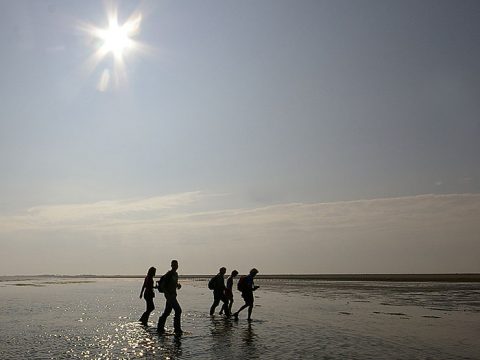
    During low tide, you can't walk to Texel from the mainland. You find mud-flats on Texel in the Mok Bay and seaward of the dike north of the village Oost. The Mok Bay is very suitable for birdwatching from the dike. The flats between Texel and Vlieland are relatively undisturbed and attract many seals and wading birds. It is possible to walk over the flats between Texel and Vlieland, however you have to make such a large detour that you need two low-tide periods to make the crossing. You have to wait in a shallow area during high tide till the water has retracted. Only highly experienced mudflat hikers can perform this adventure. It is possible to make short excursions onto the flats from the Krassekeet (near Oost) and bij the dike monument in De Cocksdorp. It is forbidden (and dangerous) to go onto the flats with groups larger than six without an experienced guide.