Content on this page requires a newer version of Adobe Flash Player.

Get Adobe Flash player


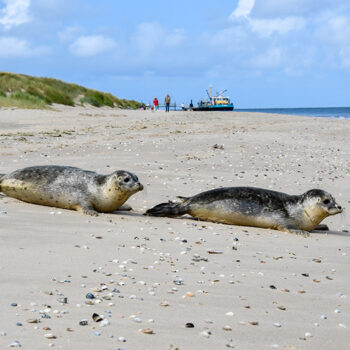
beach on Texel, foto fitis, sytske dijksen

Beaches on Texel

The beach stretches along the entire west coast of Texel. Beach ridges make up the border between beach and dunes. Marram grass has been planted on these ridges in order to hold down the sand. The southern part of the beach is protected from erosion with breakwaters. A long breakwater is also located near the lighthouse in the north. The beach is regularly raised with sand from the sea in order to combat dune erosion. This process is called sand nourishments. These sand nourishments also bring many stones on the beach, stones which were carried by glaciers from Scandinavia. Sometimes, even bones from animals that roamed the area during the last glacial are found. The beach on Texel is interrupted at the Slufter by the Slufter channel. You can only cross the channel during extreme low tides. During normal low tides, there is around 1.5 meters of water in the channel.

  • Keeping back the water
    beach near lighthouse, foto fitis, sytske dijksen

    The Department for Water Management is responsible for the Hors, the beaches and the beach ridges. Coastal erosion on Texel is a continuing problem and that is why everything is being done to defend the coast. Between Paal 9 and Paal 17, the beach has been strengthened with 24 breakwaters. The dunes around the lighthouse have been reinforced with a stronghold of concrete, asphalt and paver bricks. Sand nourishments are performed in order to slow down further deterioration of the coast. In 1995, a 550 meter-long dam was built by the northern tip of the island. The result was an very broad beach where much erosion used to occur.

  • Breeding birds on the beach
    Sanderlings, foto fitis, sytske dijksen

    Not many birds risk nesting on the beach, exposed to dangerous waves and storm. But on Texel there are three species: the little tern, the great ringed plover and the Kentish plover. Sometimes, the nests are washed away during extra high water levels. However, the birds have many more problems from people that walk along the beach with their dogs. These birds still manage to nest on the Hors and near the mouth of the Slufter. In winter, you often see many sanderlings foraging where the waves break on the shore. They don't nest on beaches but in the mountains in Norway.