Content on this page requires a newer version of Adobe Flash Player.

Get Adobe Flash player


Search in the Encyclopedia

Water en land

Birds on Texel

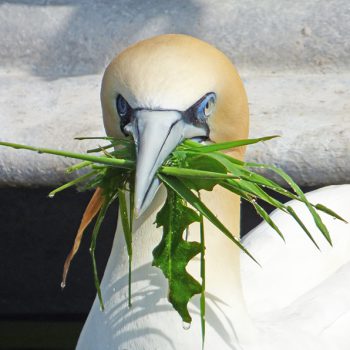
Texelaars fondly refer to their island as a 'bird island'. This is not unjust: due to the relative tranquility and prominent variation in landscapes, many different and unusual species of birds find an appropriate place to spend their time. An important migration route also runs over the island. There have been a total of around 370 different species of birds seen on Texel over the years, of which around 30% are vagrants - birds that aren't normally seen on the island. They arrive accidentally during extreme conditions, such as storm or freezes.

  • Bird stronghold Texel

    Texel is a 'stronghold' for a number of species in the Dutch avifauna. The island is the only Dutch municipality with three spoonbill colonies: in the Geul and Muy and on the Schorren. Many spoonbills started nesting on Texel after being chased out of the Zwanenwater by fox. In 2011, the colony in the Geul was the largest in all of the Netherlands, with more than 400 pairs.

    The hen harrier, a rare raptor with a preference for dunes, nests on Texel. While it has practically disappeared in the rest of the Netherlands, Texel has several nests that succeed every year. Other dune birds found in relatively large amounts on Texel include the shelduck, the European stonechat, the nightingale and the very rare short-eared owl. Many ringed plovers and sandwich, Arctic and little terns also have a preference for Texel above other coastal shores.

  • Strange birds

    You don't just see birds on Texel that belong here, such as black-tailed godwits and oystercatchers. Vagrants are also observed. In 2008, for example, there was a snowy owl, a flamingo, a North American green-winged teal and a short-toed snake eagle.

    These animals don't usually stay around on the island that long. They use Texel as a intermediate stop for resting before flying further. If they are able to find sufficient amounts of food, they sometimes stay longer. The snowy owl is a good example. The bird stayed for three months on Texel, before migrating further north via Terschelling and Ameland. However, whether or not vagrants ever reach their original destination is very dubious.

  • Colonists

    Since 1999, a growing number of cormorants have started to make their nests close by the spoonbill colony in the Muy. In just ten years, this cormorant colony has grown to around 1000 nesting pairs. Since 2005, cormorants started nesting by the colony in the Geul as well. This group is still smaller than the Muy colony, but expectations are it will grow even larger.

    In the nature monument the Petten, near Den Hoorn, young sandwich terns started to hatch for the first time in 2005. This is quite unusual because sandwich terns are very choosy when it comes to their nesting grounds: there are only a few colonies in the entire wadden region.

    The Petten is located next to the fields where experiments are taking place with salty vegetables. The agrarian pioneers and the colony birds first needed time to get used to each other, but the tern colony now has more than 1000 nests.