Content on this page requires a newer version of Adobe Flash Player.

Get Adobe Flash player


Search in the Encyclopedia
De Geul, Texel, Ecomare

The Geul

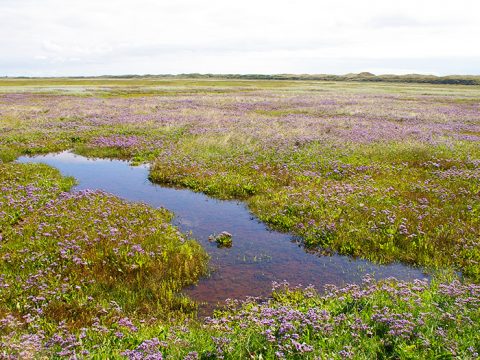
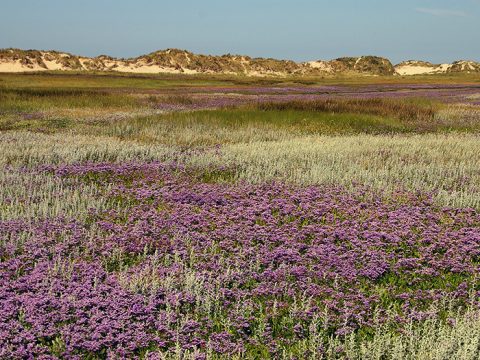
The Geul is a long valley situated between two rows of dunes in the southwestern side of th Mok Bay. The area was created when the sandbank Onrust attached itself to Texel at the beginning of the 20th century. The Geul is known for its spoonbill colony. There is a lake in the Geul, with a lookout point, also accessible for wheelchairs. You used to be able to view the nests of the spoonbills, but since the cormorants took over their favorite nesting area several years ago, the spoonbills have moved further back into the valley. The reeds are populated by many birds, including water rails, little grebes and marsh harriers. A large gull colony is located on the western side of the Geul. The area north of the Geul valley is grazed by Scottish Highlanders and Exmoor ponies.

  • Isolated dune valleys

    The Geul valley was once a beach plain, which was cut off from the beach when a new row of dunes formed. There are more of these valleys in the vicinity, dating back much further: the Pompevlak, the Grote Vlak and the Schetersweid with the Noordvlak. The Horsmeertjes, the Kelderhuispolder and the Kreeftepolder slacks formed more recently.

    In the 18th and 19th century, a different sandbankcalled Onrust lay where now the Razende Bol is located. It grew in the direction of Texel and attached to the island in 1910. The Hors grew immensely in size very quickly by this joining. A series of curve-shaped dunes formed on the Geul beach plain, thanks to the large supply of sand. These dunes constricted one end of what was to become the Geul valley. Around 1920, man-made dunes at the west side cut this valley off from the sea. When the other end of the valley, which was open to the sea by the Mok Bay, silted up, the Geul valley got the form it has today.

  • Vegetation mapping

    Many unusual plant species grow in the Geul. There were lots of moonworts found in 1997 and smooth cat's-ear, swamp moss and clay earth-moss found a year later. Swamp moss had only been found once before in the Dutch dunes: on Terschelling in 1869.

  • Spoonbills in the Geul

    The spoonbill colony in the Geul is one of the three colonies on Texel. The first nests were found in 1943. However, the colony only definitely established itself after 1954. The first years were difficult. The birds were constantly disturbed from the military practices performed on the Hors. When the military took the birds into account, the colony began to grow.

    Since 1990, spoonbills in the Zwanenwater by Callantsoog were being persecuted by fox. Since Texel has no fox, they found refuge in the Geul after moving from the Zwanenwater. Every year, the colony grows even larger. 2010 was again a top year with more than 350 pairs!

  • Gull colony expansion

    Lots of gulls nest in the Geul dunes, particularly herring gulls, common gulls and lesser black-backed gulls. The latter are the most numerous. The birds forage for worms and shellfish, either on the mud-flats, the farmlands, the shore or at sea. They like to rest on the large sandbanks and wide beaches in the area. Lesser black-backed gulls look for their food at sea while the herring gulls are more coastal birds. They fly behind fishing boats, profiting from the bycatch thrown overboard.

    Up till the 1960s, gulls were combatted. When that ended, the colonies started to grow. There was more than enough to eat, thanks to the open dumpsites and the large amounts of bycatch thrown overboard. However, the fisheries catch fewer unwanted fish and the dumpsites have been enclosed so that the colonies are not doing as well anymore.

  • Highlanders in the Geul

    Since 1995, Scottish Highlanders have been grazing in the dunes of the Geul and Bollekamer. Exmoor ponies were added to the area later on. Fences around the grazing area keep the animals from wandering too far. The cows and horses keep the fast-growing plants short and thereby give slow-growing plants more space to grow. Hikers can walk among the animals. They aren't very interested in humans.

Hooglanders in de Geul, Texel