Content on this page requires a newer version of Adobe Flash Player.

Get Adobe Flash player


Mok Bay in winter, foto fitis, sytske dijksen

In and around the Mok Bay

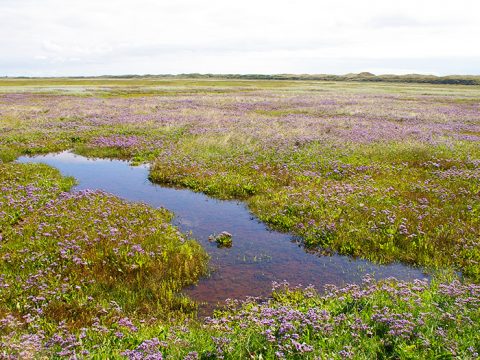
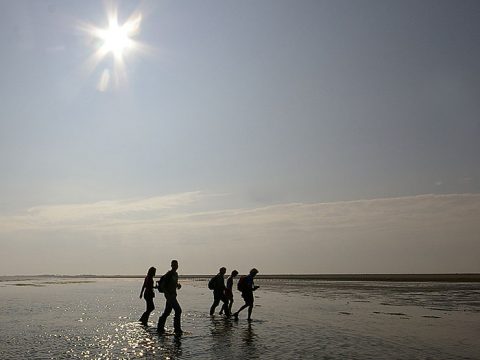
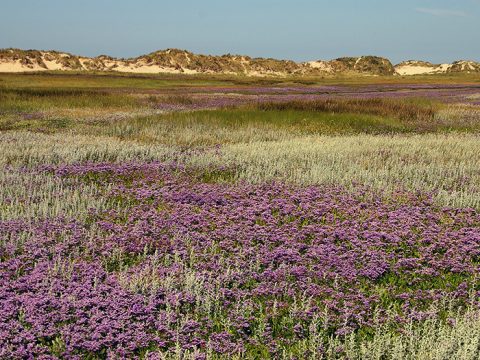
The Mok Bay is a shallow bay between the Hors and the south polders of Texel. A large part of the bay is exposed during low tide. Salt marshes are found along the western and eastern shores. Bird reservations lie on the north side, in the Hoornder Nieuwland: the Petten and 't Stoar. The dike is a great spot for bird-watching. Bioogists from the NIOZ and IMARES use the Mok Bay regularly for various studies. The Joost Dourlein Barracks, a military training camp, is located at the southwestern tip of the Mok Bay.The soldiers train with rubber boats and landing gear. When the Mok Bay was dredged in 2005, more than 5300 explosives were removed. The dikes along the bay were renewed in 2008.

  • The Spanjaardgat ('Spanish' channel)
    Mok Bay from the air, foto fitis, sytske dijksen

    The Siborsnollen and Loodsmansduin, dunes south of Den Hoorn, mark the position of the Texel coastline around 1700. To the west of this row of dunes lay the Spanjaardgat. For centuries, it was an important navigational route to and from Amsterdam. The channel kept growing more shallow after 1700. In 1749 the Hors, which was a sandbank locatd on the other side of the Spanjaardgat, attached to the island. The southeastern entrance to the Spanjaardgat remained open and later became the Mok Bay.
    The Mok Bay became a safe harbour for overwintering merchant vessels. The bay began to silt up from wind-blown sand. In 1846, a long wind-blown dike was constructed on the northern side of the Bay in order to keep the bay open. Nowadays, the channel is held open by dredging, which is important for the military training camp.

  • Fish ladder for sticklebacks

    Specially for the sticklebacks, a fish ladder was built in 1997 to make migration possible again between the Mok Bay and the Mok Ditch. This ladder makes it possible for the fish to migrate from the Wadden Sea to the lakes in the dunes. It consists of five parts, each having 4 or 5 steps. Each step is 5 centimeters higher than the previous one; the total difference in height is 110 centimeters. Water from the Mok Ditch flows via these steps to the Mok Bay. Sticklebacks can jump the 5-centimeter elevations with no problem. More sticklebacks are now in the lakes, which the spoonbills are able to profit from.

  • The Petten and 't Stoar
    Sandwich terns, foto fitis, sytske dijksen

    The Petten and 't Stoar are two bird reserves owned by Natuurmonumenten, located inside the dikes in the polder Hoornder Nieuwland. The Petten is a brackish lake with a number of little islands. The islands are protected from erosion by a low piling. A layer of shells have been laid on top, making them suitable brooding areas for avocets, black-headed gulls, ringed plovers and common terns. Thousands of sandwich terns have been nesting here since 2004. Bird watchers get a great view of the area from the road. The birds fly back and forth over the dike. They catch fish in the Mok Bay, which they feed to their chicks. During extremely high tides, large numbers of shorebirds use the area as a high-tide refuge.
    't Stoar is the meadow bird reserve to the east of the Petten. Avocets, black-tailed godwits and lapwings breed here. Wigeons are often found here in the winter.