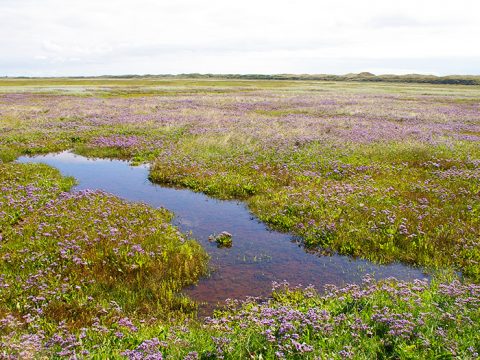
- Binnen Muy, foto fitis, sytske dijksen
The Muy
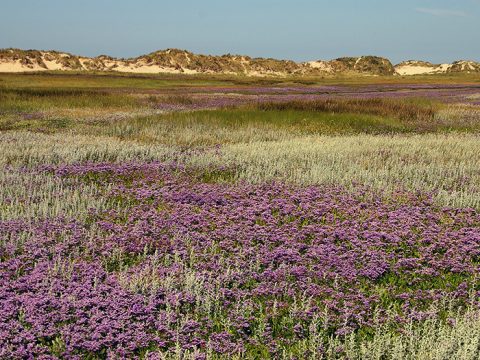
The Muy is a dune complex lying between De Koog and the Slufter. Its formation began when sand dikes were built almost four centuries ago to connect Texel with Eierland. There used to be pastures in these dunes but they have now been converted into nature areas. In the southern part of the Muy lies the Nederlanden. There too were pastures that have now been reverted to nature. In the Muy, you find the oldest spoonbill colony in the entire wadden region. Unusual plants are found growing in the dune slack known as the Buitenmuy ('outer Muy'), which is situated between two sand dikes close to the sea dike. Cattle graze in parts of the Muy as a form of nature management.
- Extensive valleys in a landscape designed by man
- Nature restoration
- Spoonbills in an unusual dune lake
- Dune pastures between the Nederlanden and the Slufter dike
- Buiten Muy (Outer Muy)
- Gulls
See also
- Black-tailed godwit
- Bog pimpernel
- Cattle
- Common gull
- Common whitethroat
- Cormorant
- Creeping willow
- Dewberry
- Drift dikes
- Dunes
- Early marsh orchid
- Early purple orchid
- Felwort
- Fragrant orchid
- Grasshopper warbler
- Grazing
- Heather
- Hen harrier
- Herring gull
- Lapwing
- Lesser butterfly orchid
- Long-eared owl
- Marsh helleborine
- Nightingale
- Northern end of Texel
- Root vole
- Redshank
- Round-leaved wintergreen
- Salt marshes
- Seawater
- Short-eared owl
- Slufter
- Spoonbill
- Willow warbler
Info
Copyright Ecomare