Content on this page requires a newer version of Adobe Flash Player.

Get Adobe Flash player


Search in the Encyclopedia
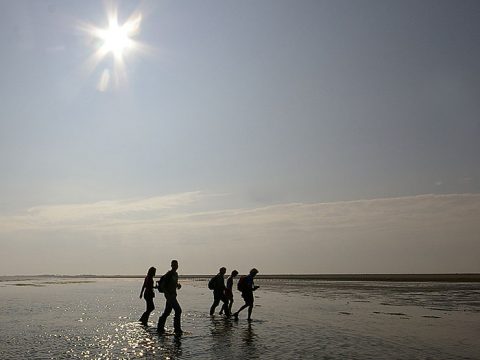
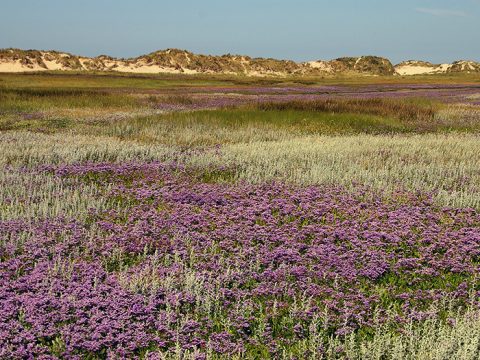
Tidal flats near De Cocksdorp, foto fitis, sytske dijksen

The tidal flats by Texel

Northeast of Texel lies an extensive tidal region. You can easily reach it by climbing over the dike. During excursions and tidal flat programs from Ecomare, you can get a close look at the unusual and rich nature found here. To get through the mud, you need to wear boots or sturdy gym shoes which you don't mind getting wet and dirty. It is possible to walk over these flats to Vlieland, however the detour is so long that you need two low tide periods to get there! That makes this adventure extremely difficult. Only seasoned tidal flat hikers can safely accomplish this hike.

  • The dikes at delta height
    Wagejot, foto fitis, sytske dijksen
    Wagejot, foto fitis, sytske dijksen

    After the storm disaster in 1953, the government decided to raise all dikes. Since 1975, all of the dikes on Texel were raised to 7.65 meters above NAP - Normal Amsterdam level. In order to reach that height, the foot of the dike measures around a hundred meters in width. The dikes on the seaward side of Texel are covered with basalt stones and asphalt.

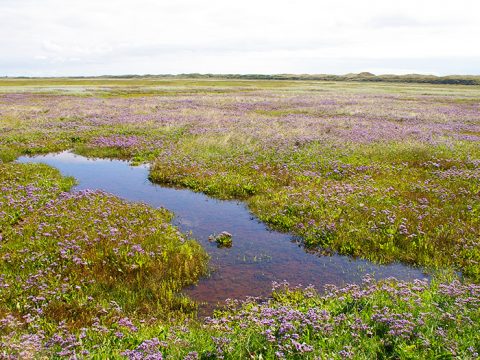
    Sheep are often used to keep the grass short. When the new dike was constructed, small nature areas formed in many places on the landside of the dike. Ceres, Ottersaat, Waagejot, Zandkes, Minkewaal and Waagejot are most of the areas. They are ponds or marshes where salty seawater mixes with fresh rainwater, turning them into brackish water reservations. These areas are very important nature regions for birds and bird watchers. In order to preserve the unusual flora and fauna, the pumping station in the polder 't Noorden allows seawater to enter every once in awhile.

  • Life in and on the mudflats
    Vlakte van Kerken, foto fitis, sytske dijksen

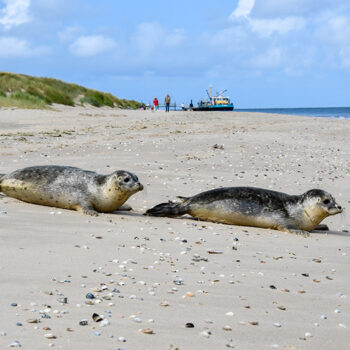
    The largest mud-flats of Texel on the northeastern side are called the Vlakte van Kerken. These flats surround the Schorren, a valuable salt marsh region. Many benthic animals live on and in the mud-flats. Fish, shrimp and crabs forage for their food during high tide, while the shorebirds rest on the Schorren waiting for the water to retract. During low tide, the shorebirds are seen on the flats foraging for food, while the marine animals flee to the channels to hide from these predators.