Content on this page requires a newer version of Adobe Flash Player.

Get Adobe Flash player


Search in the Encyclopedia

Dieren en planten

Water en land

Rottumeroog

number of residents:

0

major town:

none

surface area:

2.5 square kilometers

places to stay:

only for bird rangers

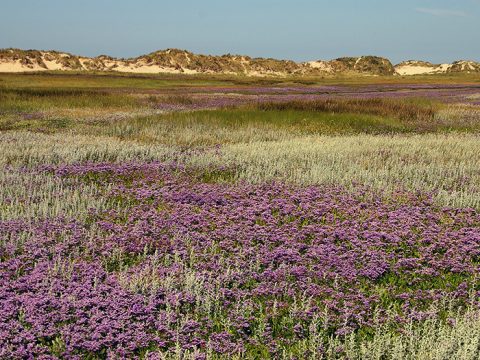
unusual animals:

peregrine, Kentish plover

unusual landscape elements:

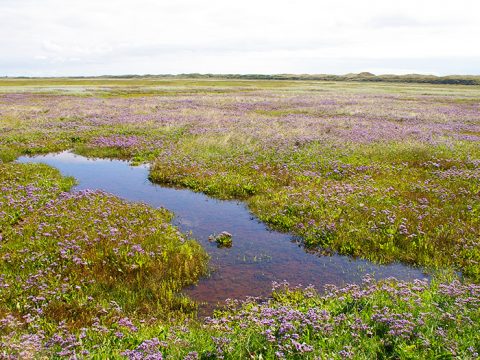
garden from former guardian, partially destroyed sand dike

Rottumeroog, http://www.kustfoto.nl/

Rottumeroog

Originally (in the 16th century), Rottumeroog lay where Rottumerplaat now lies. It then was called simply Rottum and was nine to ten kilometers long. Rottumeroog now is around 250 hectare. The island was continually crumbling away and one expected it to eventually disappear into the Western Ems. Mostly for the sake of the nature on the island, volunteers have stretched the erosion process as long as possible with the help of dams made from debris, reed screens and the planting of marram grass. Since 2002, Rottummeroog has no log shrunk but has actually grown. A protective sand bank has even formed around the island.

  • Closed to human activities
    Rottumerplaat and Rottumeroog, Ecomare

    The wadden region south of Rottumeroog and Rottumerplaat is a closed area for the shellfish fisheries. Even the NAM is not allowed to perform any definite activities here; exploitation of gas supplies in the neighborhood of the islands must take place in the North Sea.

  • Natural development
    Coastal erosion on Rottumeroog, RWS, via www.kustfot.nl

    In August 1991, Minister Maij-Weggen from the Dept. of Public Works and Assistant Secretary Gabor from the Dept. of Agriculture, Nature Management and Food Quality decided to continue managing Rottumeroog in a nature-friendly manner, the goal being to stretch the life of this island. In the most updated PKB ( Key Planning Decision) for the Wadden Sea, the fact that Rottumeroog will continue to decrease with time has been taken into consideration.

The Rottumeroog coastline