Content on this page requires a newer version of Adobe Flash Player.

Get Adobe Flash player


Search in the Encyclopedia

Dieren en planten

Water en land

Niedersachsen   Mellum   

Mens en Milieu

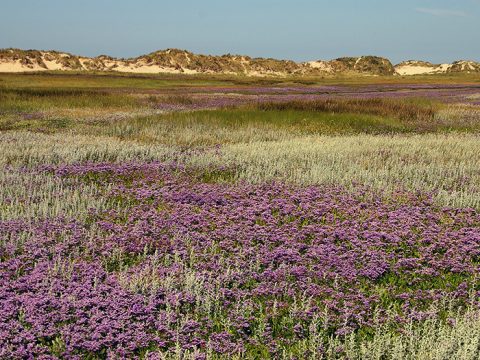
Mellum, Foto Fitis, Sytske Dijken

Mellum

Mellum is an uninhabited Niedersachsen dune island on the northern point of the Hohe-Weg-Wattrücken, between the rivers Jade and Weser. The island formed at the end of the 19th century. It is a bird reserve closed to the public the entire year. Mellum is part of the Niedersachsen Wadden Sea National Park and is categorized in the strictest nature protection zone. The only house on the island is used during the summer months exclusively for wildlife observation and scientific research purposes.

  • Dr. Heinrich Schütte and Karl Satorius

    In the beginning of the 20th century, two residents of Oldenburg, Dr. Heinrich Schütte and Karl Satorius, precisely described the development and changes of the island. Their work forms the foundation for present-day scientific research.

  • Geological history

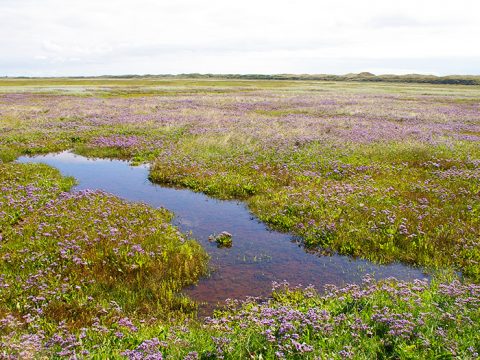
    Mellum was formed by a flood current from the northwest, which formed a sand riff. The surf further impounded the sand, forming a beach wall. Plants started to grow and dunes eventually evolved. A marsh developed in the shelter of the dunes, which grew from 7 hectares in 1903 to around 75 hectares in 2000.
    The only artificial intervention in the natural development of the island took place during the Second World War. A ring dike was built around the southern part, creating the four-hectare large polder 'Das Eingedeichte'. Bunkers from the Second World War are now the silent witnesses of the former anti-aircraft guns.
    The island is constantly changing shape. Sandbanks form and disappear. Dunes are blown away by the wind and storm surges. Elsewhere on the island, wind-blown sand raises the land. Deep channels cut through the island. Man plays no role here. This is why Mellum is very important for the National Park Niedersachsen Wadden Sea.

  • Animal world

    Mellum used to be covered with nesting terns. Nowadays, gulls have taken over. Thousands of herring gulls and lesser black=backed gullls, together with oystercatchers, nest on the island. In late summer, thousands of curlews use the island to molt.