Content on this page requires a newer version of Adobe Flash Player.

Get Adobe Flash player


Search in the Encyclopedia

Dieren en planten

Water en land

Schleswig-Holstein   Föhr   

Mens en Milieu

Föhr

Föhr in Frisian is Feerlunn and means infertile, dry land. The island lies in the North Frisian Wadden Sea between the island Amrum and the mainland. It is 82 square kilometers, 7 kilometers from north to south and 12 kilometers from west to east. Around 9000 people live on Föhr. The island is part of Schleswig-Holstein.

  • Geological history

    Föhr, Amrum and Sylt are remnants from the Saalian/Wolstonian glacial period. The meltwater in the following glacial period, the Weichselian/Devensian, formed a channel between Amrum and Föhr. At the end of the glacial period, sea-level rose. Floods destroyed the bog regions situated between the present islands. Two meters of clay deposits from the sea now cover the bogs. The current shape of the island originated from the 14th century, carved by major storms.

  • Transportation

    The island is accessible by ferry operating between Dagebüll and Föhr. The trip takes around 45 minutes. There is also an airport on the island.
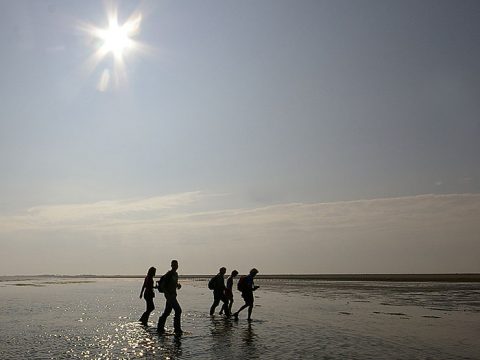
    It is possible to participate in an organized hike during low tide over the 6 kilometers of flats, from Grodunsum on Föhr to Amrum.

  • Nature and landscape

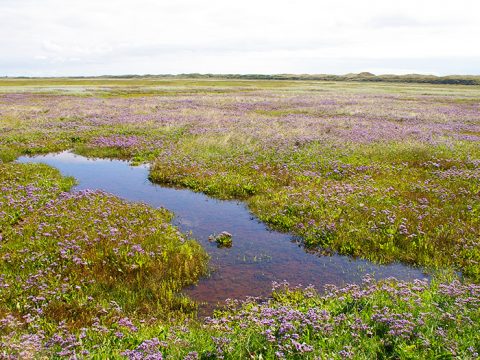
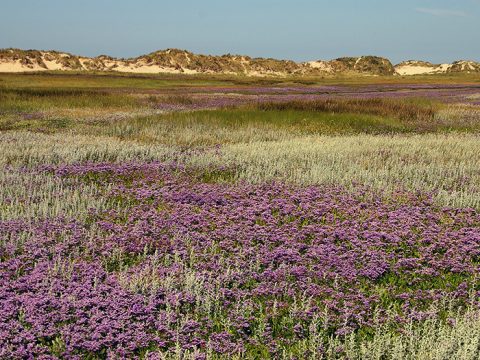
    The southern part of Föhr is made up of sandy soils dating back to the glacial period. It is a low hilly island with a few cliffs and beaches along the borders. The northern part is reclaimed marshland. Along the edges of this polder lie salt marshes and tidal flats. There are no dunes, but there are heath lands and planted woods. Lots of geese and shorebirds stop by Föhr when migrating and little terns brood on the island. The natterjack toad and the moor frog also live on the island.

    In the south of the island, you can recognize grave mounds, which date back to the Bronze Age. There is also a Viking fort. There are 17 villages and a small city (Wyk) on Föhr. Wyk has an old and renowned spa.


  • History

    Föhr has been inhabited since the Bronze Age, 1700 B.C. Around 700, the first Frisians settled here. The fort was a center for the Vikings in the 8th century. The western part of Föhr was Danish between 1368 and 1864; from then on it was German. The residents have always been farmers and fishermen, but also traded amber and salt and participated in hunting whales and seals. Tourism began with the construction of a sea spa in 1819.

  • Things to do

    In the Carl Häberlin Friesen museum in Wyk, you can find unusual prehistoric finds and local art. The three churches in Nieblum, Süderende and Wyk date back to the 13th century. There are lovely carved tombstones of sailors in the cemeteries.

  • Traditions

    Föhr is especially unusual because up till recently three languages were spoken here. The western part speaks Frisian while the eastern area speaks German. The third language is Danish, but that has practically disappeared from the island. On Föhr, you still see women wearing 18th century costumes. Frisian and Dutch influence is very evident in the design of the houses.