Content on this page requires a newer version of Adobe Flash Player.

Get Adobe Flash player


Search in the Encyclopedia

Dieren en planten

Water en land

Mens en Milieu

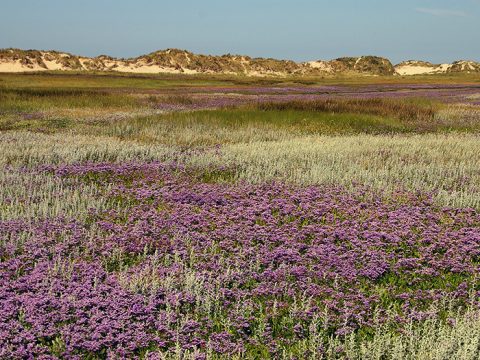
Dunes of List, Sylt, Photo Karsten Reise

Sylt

Sylt lies in the North Frisian Wadden Sea between the Danish island Rømø in the north and Amrum in the south. Of all of the North Frisian Islands, this one lies furthest to the west. With its 100 square kilometers, Sylt is the largest German Wadden Island. From north to south, it is 40 kilometers long, from east to west, between 200 meters and 12.5 kilometers wide. Sylt is part of Schleswig-Holstein. Since 1927, it has been linked to the mainland via the Hindenburg Causeway. A train track runs over the causeway. The island is a popular fashionable resort.

  • Geological history

    Föhr, Amrum and Sylt have a different geological history than the other North Frisian Islands. These three islands are remnants of the Saalian (British = Wolstonian) glacial period. Geest grounds formed in the Weichselian (British = Devensian) (sandy ground between dunes and polder) cover the largest part of Sylt. They are deposits from the last glacial period and are made up of sand, boulder clay and erratic stones.

    Since the Middle Ages, man has been combating land loss on Sylt. The island is declining in size due to continual erosion. The islanders attempt to protect the dunes and the beaches with breakwaters and concrete blocks. Sand nourishments raise the beaches. Sand transportation parallel to the coast has formed sandbanks on Sylt and Amrum.

  • Transportation

    Sylt is accessible by car and train from Niebüll. A car ferry runs between Havneby, on the neighboring island of Rømø, and List, on the north tip of Sylt.

  • Whale refuge off of Sylt and Amrum

    There is a 120,000-hectare large whale reserve off of the coast of Amrum and Sylt. It was established in 1999 and falls under Zone 2 of the Schleswig-Holstein Wadden Sea National Park. There are more than 6000 porpoises living in this area. There is no other place in the North Sea that porpoises live so close together. They come close to the coast in the summer.
    Standing rigging and industrial fisheries are forbidden in this area. These methods of fishing catch up to 10,000 porpoises per year as by-catch in other parts of the North Sea. Traditional fisheries and recreational activities are permitted in the porpoise reserve.

  • Nature and landscape

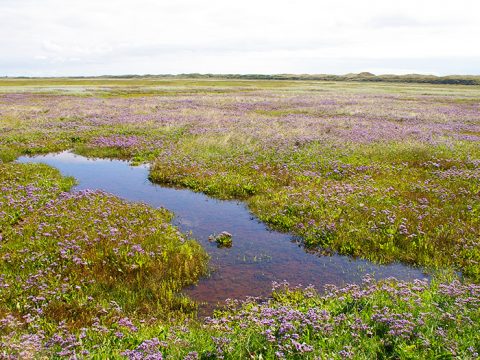
    Sylt is particularly known as a trendy tourist island. Nevertheless, a major part of the island is a nature area. That includes part of the flats, sandbanks, dunes, salt marshes, heath lands, woods and a duck decoy.

    Geological speaking, the island is very interesting. It contains remnants of moraines from the Saalian/Wolstonian glacial period and sandy regions from the Weichselian/Devensian glacial period. There are also grave mounds on the island dating back to the Bronze Age, the Roman Times and early Middle Ages.

  • Things to do

    The village Kampen is known as an artist's village, where famous painters, writers and well-known Germans like to stay. Keitum is the main town, with museums and the largest church which dates back to the Middle Ages. The remains of a Viking castle stand in Tinnum.