Content on this page requires a newer version of Adobe Flash Player.

Get Adobe Flash player


Search in the Encyclopedia

Dieren en planten

Water en land

Landforms   Coastal areas   Rocky coasts   Tidal flats and shallows   Salt marshes   Beaches   

Mens en Milieu

Norrth Sea sunset, foto fitis, sytske dijksen

Coastal areas

Several different types of coastal areas are found along the North Sea coast. English and Scottish rocky coasts are in the west. Sandy coasts with extensive stretches of beach and dune areas are found in the south along the continent border. Estuaries are located wherever a river enters the sea, the best Dutch example being the delta region. The area between Texel and the Danish peninsula Skallingen is referred to as a tidal flat region (or wad), and further to the north is the fjord coast. Salt marshes are found on the outer dike grounds in estuaries and along the edges of the flats.

  • Nature along the Dutch Coast
    young shark, foto fitis, sytske dijksen

    The coastal region has an enormous diversity in nature values. The shallow coastal water is the habitat for unique ocean floor (benthic) fauna, in which shellfish and crustaceans in particular play the lead roles. It is the spawning grounds where innumerable young fish grow to adulthood, such as sole, plaice and herring. While the beach may appear to be a bare sandy surface, several types of animals and plants have adapted to this extreme environment. The dune area, with its renown changes between wet and dry, warm and cold, and high and low places, consists of a unique flora and fauna.

  • The coast of Norway

    The Norwegian North Sea coast consists mostly of bare, rounded rocks and sections with steep cliffs. There are many large and small islands and the coast is transected by deep bays (fjords). The larger fjords cut as far as 100 km inland and can be 1200 meters deep. During the last glacial period, the weight of the ice pushed down the land, which slowly rebounded as the ice melted. The enormous depths were the work of scouring glaciers and meltwater.

  • The Scottish coast

    A rocky coast lies on the east side of Scotland, built from old rock formations where deep bays are found next to high cliffs. Although the rock formations are similiar to the Norwegian coast, the Scottish coast is much less erratic than the fjords. This difference is mainly due to the layer of ice that covered Scotland during the last glacial period. It was lighter than the layer covering the region where Norway now lies, so that Scotland rebounded less than Norway. Furthermore, the Scottish coast has dune areas, sometimes accompanied by beaches.
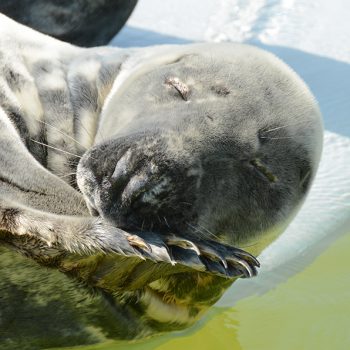
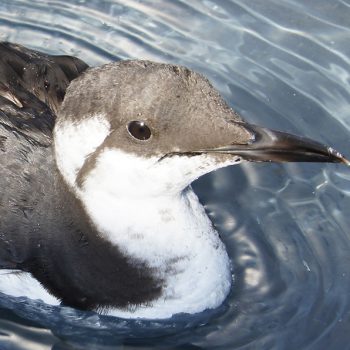
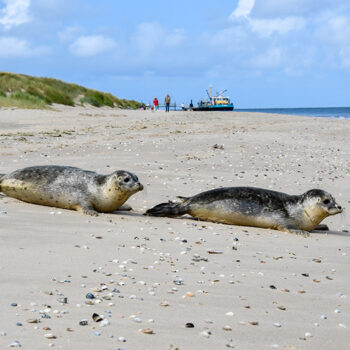
    Two archipelagos, the Orkneys and the Shetlands, form the northwest boundary of the North Sea. These islands in particular are populated by breeding seabirds (razorbills, guillemots, puffins, kittiwakes) and large colonies of grey seals; these animal populations can also be found on the other parts of the Scottish North Sea coast.

  • The English coast
    Mouth of the Thames, Ecomare
    Mouth of the Thames, Ecomare

    Younger rock formations with varying characteristics lie more to the south, on the English coast. TMostly low cliffs, often with a beach lying in front, intermingle with bays and flat river mouths. The Wash is a small tidal flat region created in one of these bays. In some places, tidal flats and salt marshes lie in the river mouths and behind the beach walls. Further to the south, above the mouth of the river Thames, lies the coast of East Anglia. This coast is made up of gravel sorted by form and size as it is transported to the beach by the waves.

    The estuary where the Thames and various other rivers end has been around already for 8000 years and has never silted up. The English coast South of this estuary is built up from remnants of cocolites, microscopic algae covered with small round calcium plates. In the course of millions of years, the calcium plates have accumulated into a layer hundreds of meters thick, which now form the well known white chalky cliffs, such as by Dover.

  • Southeastern coastal region
    coast of North-Holland, foto fitis, sytske dijksen

    The coastal regions in France, Belgium, the Netherlands, Germany and Denmark show many resemblances. The French, Belgium and Dutch coasts consist primarily of beaches with a dune area lying behind. The unique delta region lies in the south-west Netherlands and the Wadden Sea begins in the north. This region continues along the entire coast of Germany to approximately halfway through Denmark (Esjberg) and consists of a row of small islands and behind it a landscape of channels and exposed banks during low tide: the Wadden Sea. Further north, the Danish North Sea coast is built up of long beaches, sometimes with lagoons lying behind. These lagoons are referred to in Denmark as fjords.

  • Wadden landscapes
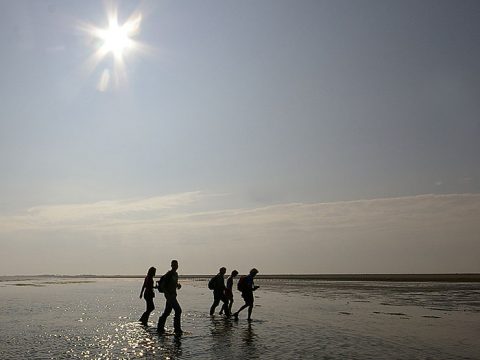
    Wadden Sea, foto fitis, sytske dijksen

    There are four natural landscapes in the wadden (tidal) region:
    - the actual flats
    - sandbanks and beaches
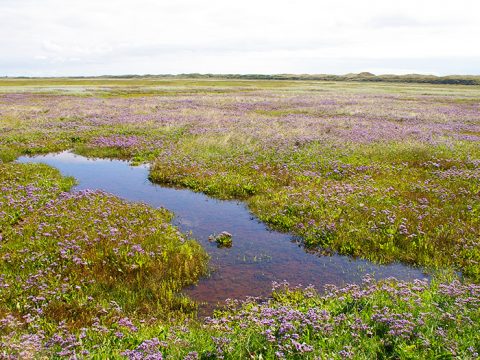
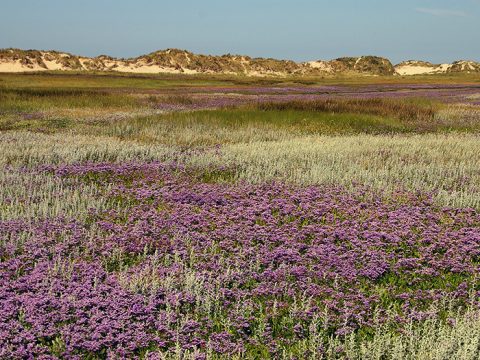
    - salt marshes
    - dunes.