Content on this page requires a newer version of Adobe Flash Player.

Get Adobe Flash player


Search in the Encyclopedia

Dieren en planten

Water en land

Landforms   Coastal areas   Rocky coasts   Tidal flats and shallows   Biotope   Salt marshes   

Mens en Milieu

Mudflat taken against the light, Ecomare

Tidal flats and shallows

The tidal flats are those sections in the Wadden Sea which emerge during low tide. It contains the entire landscape of sandbanks and exposed channels. The wad can be sand or muddy. One uses the term 'the wadden' to refer to the entire wadden region, including the islands and unexposed channels. In Groningen, the term 'wad' often only refers to the sandy exposed sandbanks. The origin of the word 'wad' comes from the old Frisian word 'vade', which means to ford or wade through.

  • Mud-flats
    Mudflats, Ecomare

    The land that is exposed as the water recedes along the Frisian-Groningen coast is very muddy and difficult to pass through. The Groningers do not talk about the 'wad' but over mud flats. In South Netherlands, the term mud flats is used to refer to all of the exposed parts of the sea channel in the Delta.

  • Sandbanks
    Sandbank, Ecomare

    Many small sand grains, clay particles and flakes of animal wastes drift in the turbulent North Sea. The clay particles and nutrient-rich waste stick together when in contact. This all sinks to the bottom in the areas in the Wadden Sea where the seawater is at rest. In that way, a sandbank is created which is exposed during low tide. These banks, and certainly those banks that are built up of a high percentage of clay, are very rich in nutrients. They form a table of food for benthic animals and sea fish during high tide and for wading birds during low tide.

  • Channels
    Wad channel, Ecomare

    The channels are those parts of the Wadden Sea that do not dry up during low tide. The ebb and flood currents move through the channels to and from the tidal inlets. The channels are the navigational routes for ships in the wadden region. This is also where benthic animals, marine mammals and sea fish live. The wad fishermen catch shrimp and flatfish here. Mussels are farmed on the edges of sandbanks that remain underwater.

  • Creeks
    Tidal creek, Ecomare

    Tidal creeks or gullies are small channels between the sand(wad)banks that are totally dry during low tide. When the water starts to ebb, it flows from the banks via the creeks to the channels. When the bank is exposed, the animals on the banks that have fed on the food follow the creeks to deeper water. During ebb, shrimp have a lot to catch in these creeks.

  • Slack tide
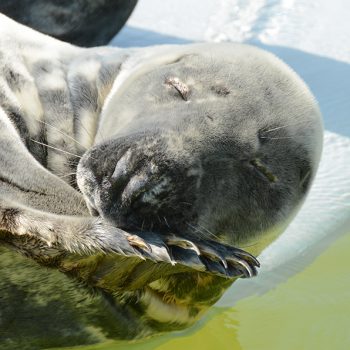
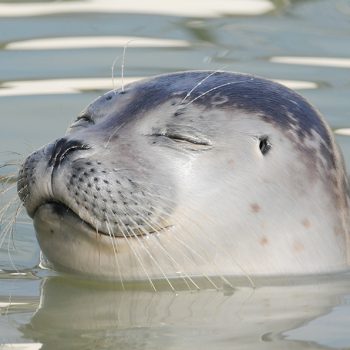
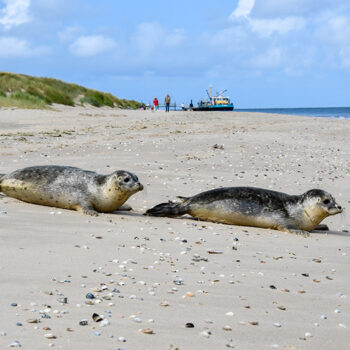
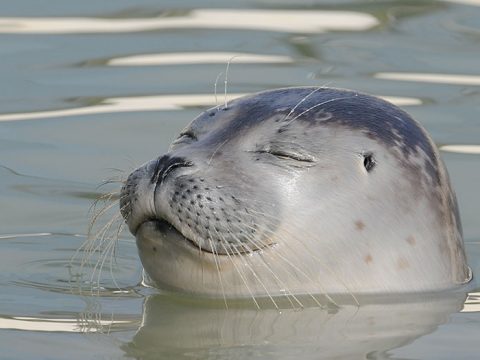
    Seal resting on a bank during ebb, Ecomare

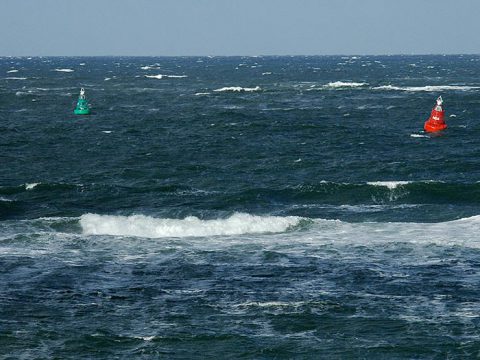
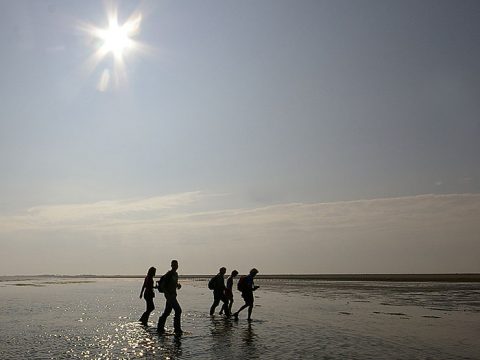
    Two flood currents meet each other behind the islands. The seawater comes to a stillstand, allowing the drifting particles to sink. This is where the wad is most elevated. Such a place is called a slack tide. The slack tidal areas are the places where mud flat hikes can cross over to the islands during low tide. The deepest navigational routes for ships over the slack tide in the Wadden Sea are marked with buoys, so that boats with a small draught can navigate over the wantij during high tide.

  • Benthic life
    Eel-pout., Ecomare
    Eel-pout., Ecomare

    The bottom of the tidal area is densely populated with all kinds of benthic animals. They feed mostly on phytoplankton or zooplankton, which they filter out of the seawater, and on one-celled algae and animals dwelling on the tidal floor. That small fry is very numerous since it can profit from a continual supply of nutrients via the rivers and from the North Sea. Newly suspended mud and nutrient materials arrive with every high tide, and most of it settles on the flats.

    On the tidal flats during low tide, it appears as if the banks are bare of plants. However, it is full of billions of one-celled diatoms. Sometimes (in the spring and summer), there are so many that the banks turn brownish in color. Diatoms are food for periwinkles, laver spire shells and lugworms. Even mussels, cockles, Baltic tellins and gapers can be found on the tidal banks. This abundance in food attracts millions of birds that feed on the shellfish. Black-tailed godwits, curlews, dunlins and various types of plovers are found in large numbers. Eelgrass is the only seed-plant able to grow on the flats.
    During high tide, the underwater banks are inhabited by hermit crabs, shrimp and the larger shore crabs. Barnacles are found on hard substances such as poles, shells and stones along the dikes.

    Many species of fish are found in the Wadden Sea. Some of them are there for just one stage in their life; others are there permanently. The fatherlasher and the eel-pout spend their whole life span in the Wadden Sea. Flounder, smelt, pipefish and the three-spined stickleback stay there for a season. Plaice, herring, sole and sprat find the Wadden region an ideal nursury.
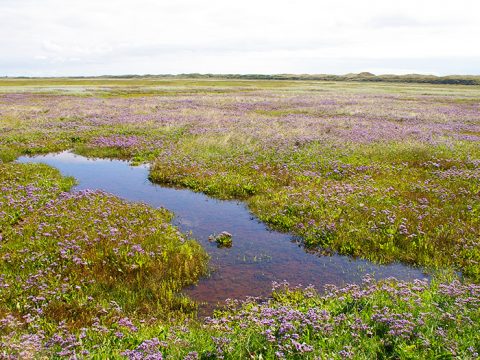
    Tidal banks grow into salt marshes when they are so elevated that they no longer flood daily. A salt marsh only floods during spring tide or storm.