- Dunes in november, Ecomare
Dune areas
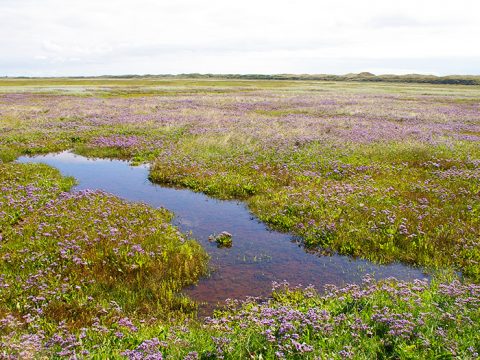
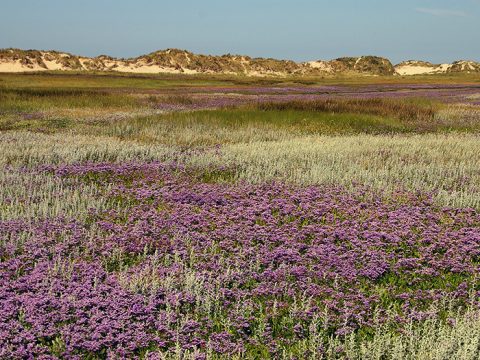
Dunes begin where the beach ends. A dune area can consist of one to several rows of dunes. They are fixed mounds of sand, broken up by lower lying regions called dune valleys. A large part of the south-easterern North Sea coast is made up of dunes. These dunes are a natural form of coastal defence, and can be threatened by coastal erosion. Due to the continual influence of the sea and the wind, one finds a unique plant and animal world in the dunes. In addition, dunes are important for recreation and can contain reservoirs for drinking water.
On Texel

- , Sytske Dijksen, www.fotofitis.nl
Young dunes and young dune valleys are mostly located on the Hors. Very nice old dunes and dune heaths are found close by Den Hoorn and to the south and north of De Koog. The richest location of sea holly is at the end of the Badweg in De Koog, one of the busiest places on the island! A lovely varied dune landscape with flowery dune fields, steep slopes, small woods and lakes is the Muy.
- Dune elements
- Calcium
- Sand
- Dune formation
- Wild growth, eutrophication and dessication
- Protection of Dutch dune regions
See also
- Animals
- Beach
- Beach flora
- Birds
- Butterflies
- Coastal protection
- Coastal recreation
- Common whitethroat
- Curlew
- Cutting sods
- Dewberry
- Dune flora
- Erosion of the Dutch coast
- Eutrophication
- Gentian family
- Grass of Parnassus
- Grazing
- Grey hair-grass
- Lichens
- Managing beach ridges
- Marram grass
- Moss
- Muy
- Nature Protection Act
- Nitrogen compounds
- North Sea
- Northern wheatear
- National Park Texel Dunes
- Nutrients
- Orchid family
- Regulations nature management
- Sand couch
- Sand lizard
- Schiermonnikoog
- Sea buckthorn
- Sky lark
- Texel
- Tides and water levels
Info
Copyright Ecomare