Content on this page requires a newer version of Adobe Flash Player.

Get Adobe Flash player


Search in the Encyclopedia

Dieren en planten

Water en land

Nature areas   Punt van Reide   

Mens en Milieu

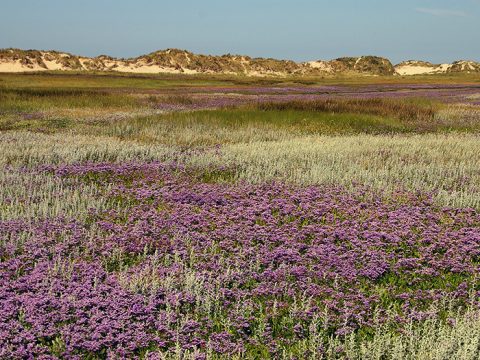
Punt van Reide, Wim Bouwland, www.bouwland.org

Punt van Reide / Breebaarpolder

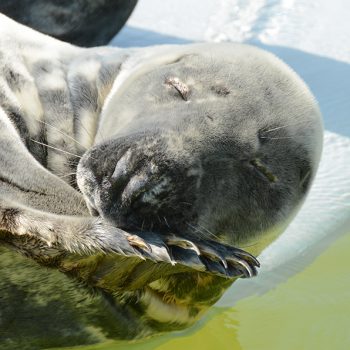
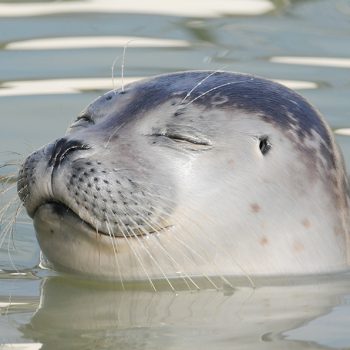
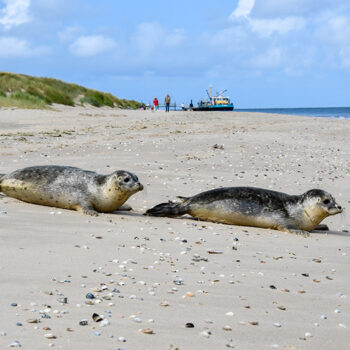
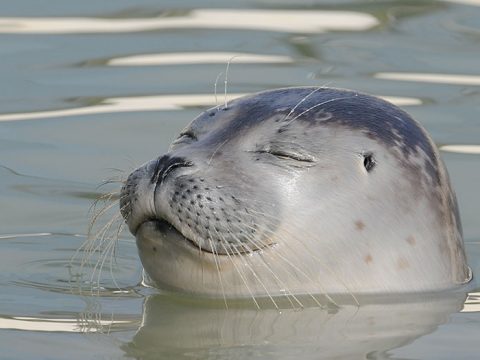
What did the north of Groningen look like before dikes were built? Looking at the Punt van Reide, one can get an idea. Taking an excursion in the area is the only way to see the valuable nature since it is closed to the public. One can observe the area from the dike, especially with binoculars. If it is low tide, several seals can often be seen on the distant flats in the Dollard.

  • Landside of the dike
    Breedbaartpolder, Wim Bouwland, www.bouwland.org

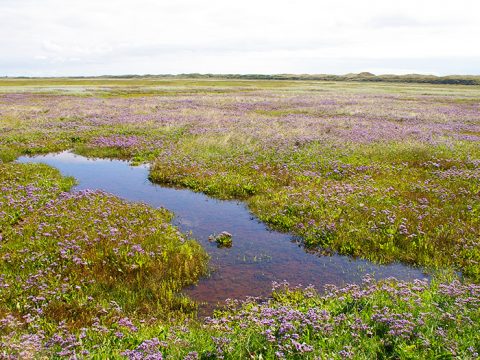
    The area on the landside of the dike is now nature area. On this side of the Delta dike is a lot of brackish water influence. Wild sea aster blossoms in August and September in the deserted lock chamber. This terrain, the Polder Breebaart, is extensively managed momentarily. There are always groups of waders, such as the avocet (the bird that made the Dollard region known worldwide among bird experts) around the brackish ponds of the Breebaart.
    The Breebaart polder dates back to 1979. It was constructed as part of the plan to dig a canal from the Punt van Reide to the Westerwoldse Aa. Although the sluices for the canal were already built, the actually digging never took place due to protests from farmers and nature conservationists.
    The polder Breebaart is managed by the Groninger Landschap. This organization had a pipe built into the sea dike of the polder so that more salt water can enter.
    Two wierden lay on the Punt itself, a sign of inhabitation here centuries ago. And not only here but also in the water-tidal region east of the point. The village Oosterreide and Westerreide probably stood close by the Punt.
    The Punt itself is salt marsh: it only floods during tidal floods. However, where the wierden are at the far end it is usually dry.