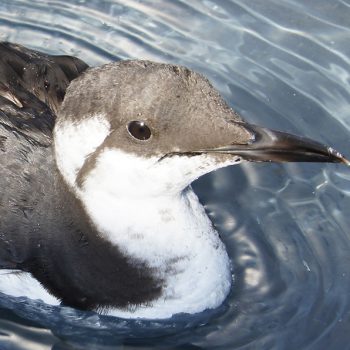
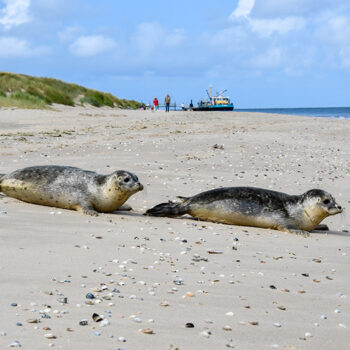
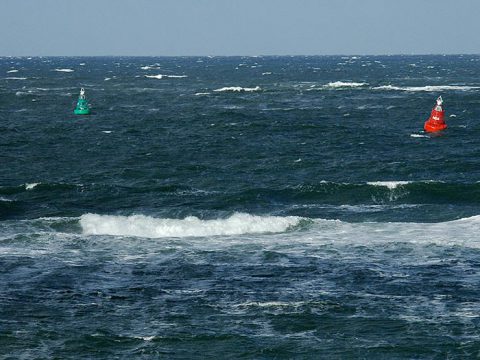
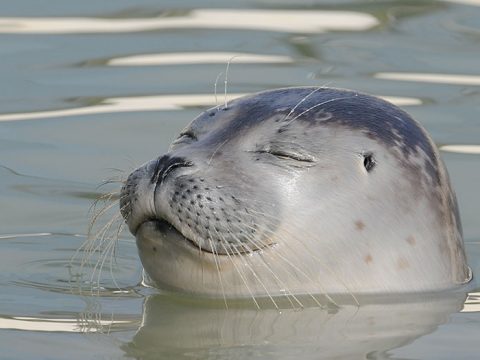
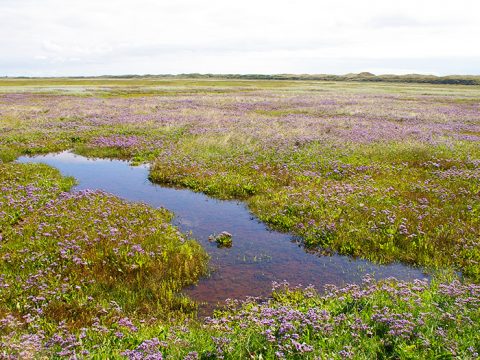
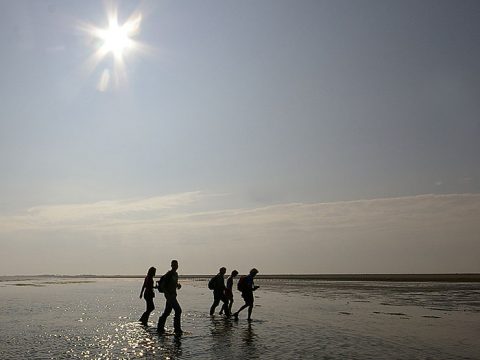
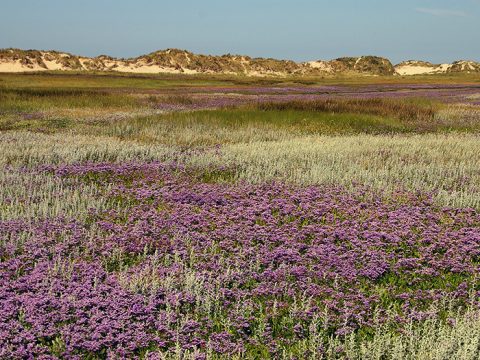
Within the wadden region, Rottumerplaat and Rottumeroog both fulfill an important function as a rest and foraging area for those species of birds which have a preference for beach plains and sandbanks. Some examples are the sanderling, the dunlin and the Kentish plover. A large number of coastal birds breed on Rottumerplaat and Rottumeroog such as the eider, the shelduck, the Arctic tern, the common tern, the little tern, the Kentish plover and the ringed plover.
Since management of the island was more or less stopped in the early 1990s, at least one bird species has profited: the sandwich tern established itself in 1996 as a breeding bird on Rottumerplaat. In 1998, there was already talk of a large breeding colony of 2335 pairs of this fairly rare bird.
Both islands and the mud flats to the south of them fall under the strictest regulations of the Nature Protection Act (article 17). Rottumerplaat is closed the whole year round for the public. The islands are guarded from 25 April to 18 August, as well as in the weekends in the pre- and post-season.
The wadden region south of Rottumeroog and Rottumerplaat is a closed area for the shellfish fisheries. Even the NAM is not allowed to perform any definite activities here; exploitation of gas supplies in the neighborhood of the islands must take place in the North Sea.
There are two buildings on Rottumerplaat: the lookout tower (the 'drenkelingenhuis') and a building belonging to the State Forestry, where volunteers can stay when taking nature inventories on the island.