Content on this page requires a newer version of Adobe Flash Player.

Get Adobe Flash player


Search in the Encyclopedia

Dieren en planten

Water en land

Schleswig-Holstein   Pellworm   

Mens en Milieu

Pellworm, lighthouse and terp house, Ecomare

Pellworm

Pellworm is an island in the North Frisian Wadden Sea, west of Nordstrand. The island is 38 square kilometers. The surrounding dike is 8 meters high and 25 kilometers long. Approximately 1200 people live on the island. Pellworm is part of Schleswig-Holstein.

  • Geological history
    Wadden Sea near Pellworm, foto fitis, sytske dijksen

    Pellworm used to be part of the land surrounding Strand. Large amounts of land disappeared during the destructive storm of 1362. Subsequent storms led to further degradation of Alt-Nordstrand. A final storm in 1634 resulted in the islands Pellworm, Nordstrand and the Hallig Nordstrandischmoor. The residents began to reclaim the remaining land during the years that followed.

  • Transportation

    You can get to Pellworm by boat or by air. A car ferry operates between Pellworm and the harbor of Strucklahnungshörn on Nordstrand. There is also a boat service with Husum. Furthermore, Pellworm has an airport.
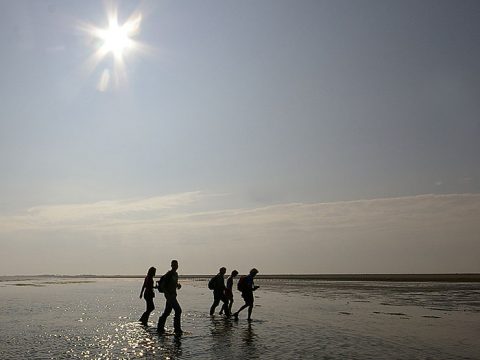
    During low tide, it is possible to walk to the Hallig Süderoog (approximately 5 kilometers southwest of Pellworm) departing from the dike near Westerkoog. This walk is only allowed under guidance. The Schutzstation Wattenmeer is one of the several organizations which provides a guide.

  • Nature and landscape

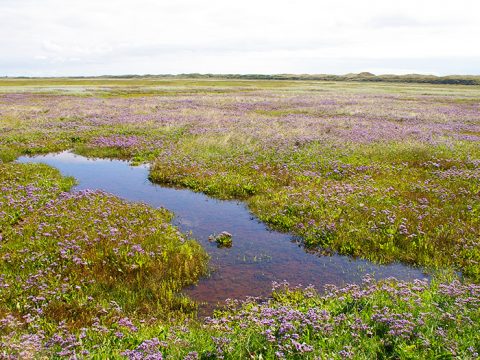
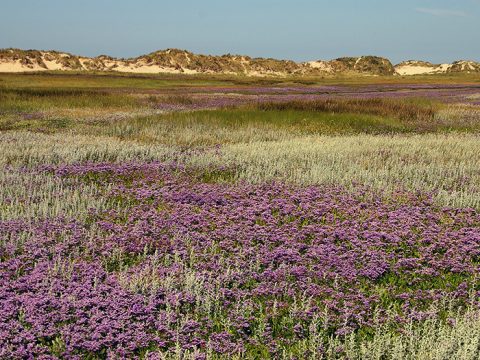
    Pellworm doesn't have any dunes or beaches; it is surrounded by dikes. There are duck decoys on the island and so-called 'Pütten', holes located along the dikes dug during their construction. There is also a low-lying brackish area, which is flooded during the winter. Pellworm has 60 farms. Milk from the island is renowned. Tammensiel is the largest village. Salt marshes with grazing sheep and extensive tidal flats surround the Pellworm dikes.

  • History

    Since the 7th century, the Frisians came to this region to settle, including the land where Pellworm now lies. After many floods, the residents built dikes around Pellworm. This occurred as early as the 17th century. In the following centuries, several polders were added. The 18th century was a bad time for the islanders due to illness and new floods. This is when the Frisian language also disappeared from the island. Pellworm has always been an island of farmers. The first tourists only arrived around 1900. Nowadays, tourism is the most important source of income on Pellworm. The 'Nordseeheilbad' (spa) attracts many visitors.

  • Things to do

    Pellworm has a lighthouse, open to the public. It is around 100 years old and 35 meters tall. The island museum recounts the history, the many floods and drowned villages and the Wadden Sea.

  • Traditions

    Pellworm has several traditions. Just like on the other Nordfrisian islands, the residents celebrate 'Biikebrennen' on February 21, when large bonfires are lit. On New Year's Eve, the children walk from house to house with the 'Rummelpott', a primitive music instrument. After singing a song, they get candy or money. 'Ringsteken' (stabbing a ring with a stick while riding in a horse-drawn carriage) is popular on Pellworm.