Barnacle goose
size:
58-70 centimeters; 132-145 centimeters wingspan
color (adults):
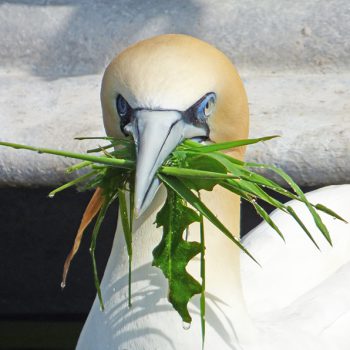
yellowish white face, black neck and back of head, white belly, silver-grey wings and back with black and white bars.
food:
grass, twigs and seeds, sometimes molluscs and shellfish
threats:
arctic fox, polar bears in nesting areas up north
Dutch status:
nesting bird since 1980; primarily migratory and winter guest
habitat
nests on high cliffs close to wetlands formally only in Arctic regions
In the Netherlands: in open, bare grasslands or reed fields
reproduction:
3-7 eggs
life span:
12 years (maximum known age: ~27 years)
- Dut: Brandgans
- Eng: Barnacle Goose
- Fren: Bernache nonnette
- Ger: Weisswangengans (Nonnengans)
- Dan: Bramgis
- Nor: Hvitkinngis
- Frisian: Paugoes
- Ital: Oca facciabianca
- Lat: Branta leucopsis

- Barnacle goose, Jeroen Reneerkens (jeroenreneerkens@hetnet.nl)
Barnacle goose
These robust geese brood in barren areas in the high north. Barnacle geese lay their eggs on ridges located high off the ground, unreachable for predators. Because the chicks are unable to fly right away, they need to eventually jump off the cliffs. It is a rocky bottom and not all chicks survive the ordeal. Since the end of the 20th century, more and more barnacle geese have been staying in the Netherlands to nest. This probably began with tame birds that went wild.
On Texel
Barnacle geese have been nesting successfully on Texel since the start of this century. In 2010, there were already 58 pairs. There are more barnacle geese on Texel during the winter, usually several hundred. But compared to other Wadden Islands, it isn't very much.
WWW
See also
Info
Copyright Ecomare
print