Herring gull
size:
length: 60 centimeters
wingspan: 144 centimeters
weight:
1 kilogram
color:
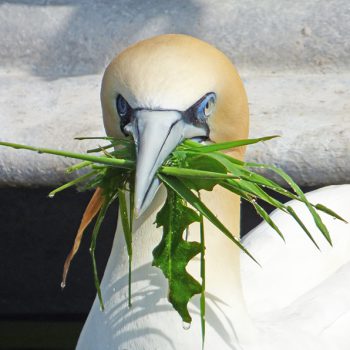
white with gray wings and back, noticeable yellow eyes and beak with red spot, flesh-colored legs
age:
maximum 34 years
food:
everything; from shellfish to fish, from rubbish to small young birds
movement:
fly, walk and swim
reproduction:
breeding season: end April-June around 28-30 days
number of eggs per nest: usually 3
- Dut: Zilvermeeuw
- Eng: Herring Gull
- Fren: Goéland argenté
- Ger: Silbermöwe
- Dan: Sølvmige
- Nor: Grimike
- Frisian: Sulverkob
- Ital: Gabbiano reale
- Lat: Larus argentatus

- Herring gull, Marijke de Boer
Herring Gull
With their intense yellow eyes, herring gulls look quite agressive. Their downout brutal behavior contributes further to this poor image. They shamelessly steal bread from your hand and are seen as predators of young animals and eggs. However, it has never been proved that gulls are the cause of declining bird or other animal populations. What's more, they clean up lots of litter: ice cream cones that fall on the ground or french fries are gone in no time.
On Texel

- Herring gull with starfish, foto fitis, adriaan dijksen
Thousand of pairs of herring gulls build nests on Texel. The numbers fluctuate strongly from year to year. In 2007, there were more lesser black-backed gulls, compared to the previous year. These birds are not direct competitors of each other on the island. They forage for food in different areas. The herring gulls look for food on the island and in the Wadden Sea while the lesser black-backed gull forages in the North Sea. You see both species by the TESO ferry. The Texelaars call the herring gull a 'large gull' (groote meeuw).
WWW
See also
Info
Copyright Ecomare
print