Orache species
size:
Shore: 30 to 100 centimeters
Babington's: 30 to 60 centimeters
Frosted: 20 to 60 centimeters
Hastate: 20 to 90 centimeters
color:
leaf: green
blossoms:
July through September
pollination:
shore: wind
reproduction:
seed, spread bij seawater and wind
lifespan:
annual
- Dut: Strandmelde
- Lat: Atriplex littoralis
- Eng: Shore Orache
- Fren: Arroche littorale
- Ger: Strand-Melde
- Dut: Kustmelde
- Lat: Atriplex glabriuscula
- Ger: Graue Melde
- Eng: Babington's Orache
- Fren: Aroche de Babington
- Dut: Gelobde melde
- Lat: Atriplex laciniata
- Ger: Sand Melde (Gelappte Melde)
- Eng: Frosted orache
- Fre: Aroche des sables
- Dan: Sølv-Mælde
- Dut: Spiesmelde
- Lat: Atriplex prostrata
- Eng: Spear-leaved Orache, Thin-leaved Orache, Triangle Orache
- Fren: Arroche hastee
- Ger: Spiessblättrige Melde (Spiessmelde)
- Dan: Spydmælde

- Shore orache, Ecomare, Sytske Dijksen
Orache species
There are several species of orache notable for the coast. Shore orache grows on the beach in the flood mark and along the borders of salt marshes and sea dikes. Babington's orache and spear-leaved orache grow between stones on sea dikes, above the high-tide water line. Frosted orache is also a species of the flood mark, particularly when it is made up of brown seaweed buried in sand. Oraches are commonly called saltbushes, thanks to the fact that their leaves retain so much salt.
On Texel

- , Ecomare, Salko de Wolf
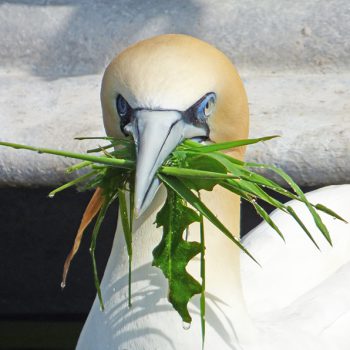
Various species of orache grow on the Schorren salt marsh. The tough stems make good material for bird nests. The spoonbills that brood on the Schorren use orache stems to build tall nests, sometimes more than a half meter high. That is not a luxury. If their nests are too low to the ground, strong spring tides will wash away the eggs, the chicks and even the nest.
See also
Info
Copyright Ecomare
print